

Views: 0 Author: Site Editor Publish Time: 2026-07-14 Origin: Site


Reliable off-grid power for portable devices remains a non-negotiable requirement for intensive outdoor, DIY, and commercial applications. When you operate equipment away from standard wall outlets, your power source entirely dictates your operational success. Unfortunately, the current market floods buyers with highly exaggerated capacity claims, particularly regarding a 12000mAh Lithium Battery. Buyers constantly navigate a minefield of misleading specifications, hidden safety concerns, and wildly varying voltage outputs. You need a legitimate, safe solution to avoid unexpected equipment failure and hazardous malfunctions. Choosing the right power source requires looking past aggressive marketing jargon. You must rigorously evaluate cell configuration, Battery Management System (BMS) reliability, and the specific voltage requirements for your distinct use case. We will break down how to identify authentic capacities, calculate actual runtimes, and safely integrate these packs into your projects. You will learn the physics behind these cells and gain actionable procurement strategies.
The internet hosts widespread discussions across e-commerce marketplaces and enthusiast forums regarding fake battery capacities. The physics of current lithium-ion technology set hard limits on energy storage. The absolute maximum capacity for a top-tier single 18650 cell sits around 3500mAh to 3600mAh. Any vendor claiming a single cylindrical cell offers 12000mAh is presenting physically impossible specifications. The internal volume of an 18mm by 65mm cylinder simply cannot hold enough active anode and cathode material to reach this capacity limit.
Identifying legitimate configurations requires understanding basic battery pack anatomy. A genuine 12000mAh pack relying on standard cylindrical cells must utilize a multi-cell arrangement. Engineers achieve this by wiring cells in parallel. A standard approach uses four 3000mAh 18650 cells wired together (a 4P configuration). Alternatively, modern packs might use three larger 4000mAh 21700 cells (a 3P configuration). You should always verify the internal cell count before trusting a capacity label.
The weight test serves as the most effective method for quickly weeding out counterfeit products. High-quality lithium cells possess a predictable density. A single premium 18650 cell weighs roughly 45 to 50 grams. Therefore, a legitimate four-cell pack will weigh at least 200 grams, not accounting for the wiring, nickel strips, and protective shrink wrap. Counterfeiters often use smaller, lower-capacity cells housed inside empty shells filled with sand or flour to mimic the expected weight. Always cross-reference the physical weight and dimensions of the product against known lithium density standards. If a pack feels suspiciously lightweight, it will fail to deliver the advertised capacity.
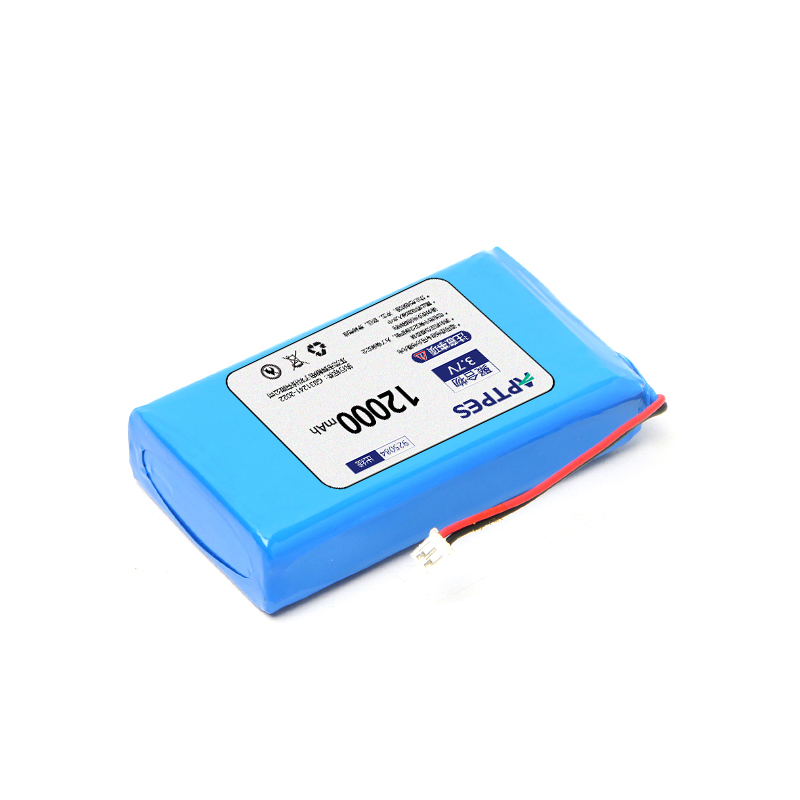
Evaluating a power source requires looking at actual energy output rather than just the milliamp-hour rating. You must calculate Watt-hours (Wh) to understand the true usable energy. The formula is straightforward: (mAh × V) / 1000 = Wh. A raw 3.7V pack yields 44.4Wh of energy. However, if manufacturers wire the cells in series to create a 12V pack, the energy density changes drastically. A true 12V pack at this capacity yields 144Wh. This massive difference dictates how long your device runs and alters strict TSA travel compliance rules.
| Nominal Voltage | Advertised Capacity | Total Energy (Wh) | Typical Travel Status |
|---|---|---|---|
| 3.7V (Raw Cell/Pack) | 12000mAh | 44.4 Wh | TSA Compliant |
| 5.0V (USB Output) | 12000mAh | 60.0 Wh | TSA Compliant |
| 12.0V (Series Pack) | 12000mAh | 144.0 Wh | Requires Airline Approval |
You must evaluate the Battery Management System (BMS) with the same rigor you apply to the cells themselves. The BMS acts as the protective brain of the unit. Look for built-in overcharge protection (OVP), deep depletion safeguards (UVP), and thermal cutoff limits (OTP). Operating a multi-cell pack without these integrated limits invites catastrophic failure, including thermal runaway or rapid cell degradation.
The discharge rate, commonly known as the C-Rating, dictates how much continuous power the battery can supply safely. You must match the battery’s continuous discharge rating with your device’s maximum current draw. For example, a 1C rating on a 12Ah pack means it can deliver 12 Amps continuously. High-drain LED lighting arrays or motorized equipment require high-discharge cells. Conversely, low-draw environmental sensors perform perfectly fine on standard-discharge packs.
Finally, assess the form factor and connectors. Your physical enclosure dictates the integration limits. Cylindrical packs provide rugged durability, while flat LiPo pouches offer slim profiles for compact enclosures. Terminal types matter significantly. You need to ensure the battery features compatible connectors like JST, XT60, DC barrel jacks, or standard USB ports to match your hardware.
Selecting the optimal configuration requires aligning the battery architecture with your specific application. The following recommendations focus on evaluation logic rather than specific, potentially discontinued models.
The target use case for this category includes phones, tablets, and basic portable electronics. When evaluating USB power banks, look for transparent Wh ratings stamped directly on the outer casing. Multi-LED charge indicators or digital displays provide critical visibility into remaining capacity. You should prioritize standard fast-charging protocols, such as USB Power Delivery (PD) or Quick Charge (QC), to ensure compatibility with modern devices.
Keep the internal limitations in mind. The internal circuitry must boost the native 3.7V of the lithium cells up to the 5V required for USB output. This electrical conversion generates heat and results in roughly 10% to 15% energy loss. Consequently, a perfectly healthy unit will never deliver 100% of its rated cell capacity directly to your smartphone.
These specialized packs power custom IoT devices, Raspberry Pi hardware setups, and specialized custom lighting rigs. The evaluation logic heavily prioritizes safety and integration ease. A pre-wired pack must feature a high-quality integrated BMS. Standard JST or XH connectors allow for rapid prototyping. You should demand reputable cell sourcing. Packs built with cells from major manufacturers like Panasonic, Samsung, or LG consistently outlast generic alternatives.
This category presents strict integration limits. Working with raw 3.7V components requires fundamental electrical knowledge. You must understand how to safely integrate the pack, calculate correct wire gauges, and implement compatible charging circuits to prevent accidental short circuits.
Portable audio amplifiers, heavy camera rigs, CPAP machines, and motorized telescopes rely on 12V power. Manufacturers usually build these packs using a 3S (three cells in series) configuration to achieve an 11.1V or 12V output. The most critical evaluation step involves verifying the capacity label. You must check if the 12000mAh rating applies to the final 12V output or merely reflects the combined capacity of the raw 3.7V cells inside. Misunderstanding this distinction leads to severely inaccurate runtime calculations.
Taking a portable power source on an airplane involves strict adherence to aviation regulations. The TSA and FAA rigorously enforce a "100-Watt-hour rule" for lithium-ion products. A standard 3.7V pack calculates out to precisely 44.4Wh. This specification remains perfectly safe and fully legal for carry-on luggage without requiring special airline permission. However, aviation authorities generally prohibit any loose lithium batteries in checked baggage. You must carry them in the cabin where crew members can address potential thermal events immediately.
Thermal management poses a significant risk factor during operation. You must provide proper enclosure ventilation for portable devices running high-drain tasks. When cells discharge rapidly, internal internal resistance generates substantial heat. Trapping this heat inside a sealed plastic box causes premature cell degradation and dangerous physical swelling. Always design your project enclosures with thermal dissipation in mind.
Charging infrastructure remains a primary failure vector. You must emphasize the necessity of pairing the battery with a properly rated, dedicated lithium charger. Standard chargers use a specific Constant Current/Constant Voltage (CC/CV) algorithm. Charging a multi-cell pack with an incompatible adapter, such as a basic lead-acid charger, will over-volt the cells. This specific error bypasses internal safeties and initiates thermal runaway.
Securing a reliable unit requires a systematic approach. Follow this checklist to eliminate substandard products and ensure optimal performance.
A legitimate 12000mAh Lithium Battery offers an excellent balance of high capacity and portability. These packs deliver outstanding value provided the specifications remain authentic and match your specific device voltage requirements. You must navigate the market carefully to separate engineering reality from exaggerated marketing claims.
Disregard suspiciously cheap, single-cell options found on unverified marketplaces. They cannot physically hold the energy they promise. Instead, invest your budget in verified multi-cell packs equipped with robust BMS protection and transparent technical specifications.
Take action today by calculating your exact Wh requirements. Assess your gear's precise power draw before finalizing your purchase. Relying on accurate mathematical calculations guarantees you will never run out of power during critical field operations.
A: No. Current lithium-ion chemistry limits a top-tier single 18650 cell to approximately 3600mAh. Claims exceeding this limit on a single cylindrical cell are physically impossible. A true 12000mAh unit always requires multiple cells wired in parallel, such as four 3000mAh cells.
A: Runtime depends entirely on your device's load and the battery's voltage. If you power a 10W device using a 5V USB output (60Wh total capacity), you calculate runtime by dividing 60Wh by 10W. This yields approximately 6 hours, excluding minor efficiency losses during voltage conversion.
A: Yes. Aviation regulations enforce a strict 100-Watt-hour (Wh) limit for carry-on luggage. A standard 3.7V pack calculates out to 44.4Wh (12Ah x 3.7V = 44.4Wh). This specification falls well below the TSA limit, making it perfectly legal for carry-on travel.
A: Charging time depends strictly on the input current of your charger. A standard 2 Amp charger will take approximately 6 to 7 hours to replenish the pack fully from zero. Using advanced fast-charging protocols can significantly reduce this time depending on the BMS limits.


