

Views: 0 Author: Site Editor Publish Time: 2026-07-24 Origin: Site


Upgrading small-scale power systems from heavy sealed lead-acid (SLA) units to a 12000mAh Lithium Battery requires moving past bold marketing claims. You must focus strictly on technical realities. A 12000mAh (12 Amp-hour) footprint remains highly specific. It proves ideal for marine electronics, RV accessory banks, and customized utility vehicles. However, this niche market is highly susceptible to exaggerated capacity claims from low-tier manufacturers. Many buyers face issues when units fail under real-world loads.
This guide provides a skeptical, engineering-focused framework to evaluate these claims. You will discover how to shortlist and implement a reliable power solution. We show you exactly how to secure genuine performance. You can upgrade successfully without overpaying or compromising on critical safety standards. Our detailed criteria will shield you from common purchasing mistakes. You will master the fundamentals of modern energy storage selection.
You must clearly define what a 12Ah capacity can actually run before purchasing. This footprint serves highly specific power demands. Common applications include dedicated fish finders, off-grid LED lighting arrays, remote gate openers, and small trolling motor accessories. A standard fish finder draws roughly one amp per hour. A genuine 12Ah unit powers it effortlessly for nearly 12 hours. Remote gate openers pull brief burst currents. Off-grid LED arrays demand steady overnight voltage. You must calculate your specific device loads accurately.
We measure deployment success by evaluating voltage stability. Success means consistent voltage delivery until the unit reaches 95% depletion. Older SLA batteries suffer severe voltage drops during discharge. They dim lights and reboot sensitive marine electronics prematurely. A high-quality 12000mAh Lithium Battery maintains over 12.8 volts throughout its discharge cycle. It ensures your electronics operate at peak efficiency.
Understand your scalability limits early in the design phase. Do not overload a single small-capacity unit. A 12Ah pack serves dedicated, isolated loads perfectly. If you plan to run a 55 lb thrust trolling motor or a large RV refrigerator, you must size up immediately. Sizing up to a 20Ah or 50Ah unit prevents rapid cell degradation. We establish realistic boundaries below to help guide your system design.
| Capacity Size | Ideal Application Scenarios | Limitations & Constraints |
|---|---|---|
| 12000mAh (12Ah) | Fish finders, gate openers, kayak electronics, small LEDs. | Cannot support heavy inductive loads or main propulsion motors. |
| 20000mAh (20Ah) | Large marine displays, backup sump pumps, CPAP machines. | Adds extra weight. May not fit standard 12Ah battery trays. |
| 50000mAh+ (50Ah+) | Trolling motors, RV house banks, off-grid cabins. | Requires heavy-gauge wiring and upgraded charging infrastructure. |
You must compare Lithium Iron Phosphate (LiFePO4) against standard Lithium-Ion (NMC) configurations. NMC packs offer a slightly higher specific energy density. They weigh less overall. However, LiFePO4 delivers vastly superior thermal stability. You need this stability in demanding off-grid environments. LiFePO4 routinely yields 2,000 to 5,000 deep charge cycles. NMC typically degrades sharply after 500 to 800 cycles. We strongly recommend LiFePO4 for all marine and mobility environments.
Let us map specific internal features to tangible field outcomes.
Look closely at terminal build quality during your evaluation. Cheap stamped metal terminals corrode rapidly outdoors. They introduce heavy electrical resistance over time. High-moisture environments demand solid brass or tinned copper terminals. These upgraded contacts ensure reliable power delivery. They prevent voltage bottlenecks during high-current draws.
| Metric | LiFePO4 (Lithium Iron Phosphate) | Standard Lithium-Ion (NMC) |
|---|---|---|
| Thermal Stability | Excellent (High runaway threshold) | Moderate (Prone to overheating) |
| Cycle Life | 2,000 - 5,000 cycles | 500 - 800 cycles |
| Energy Density | Moderate (Slightly heavier) | High (Lighter weight) |
| Best Use Case | Marine, RV, Solar, Mobility | Smartphones, Laptops, Drones |
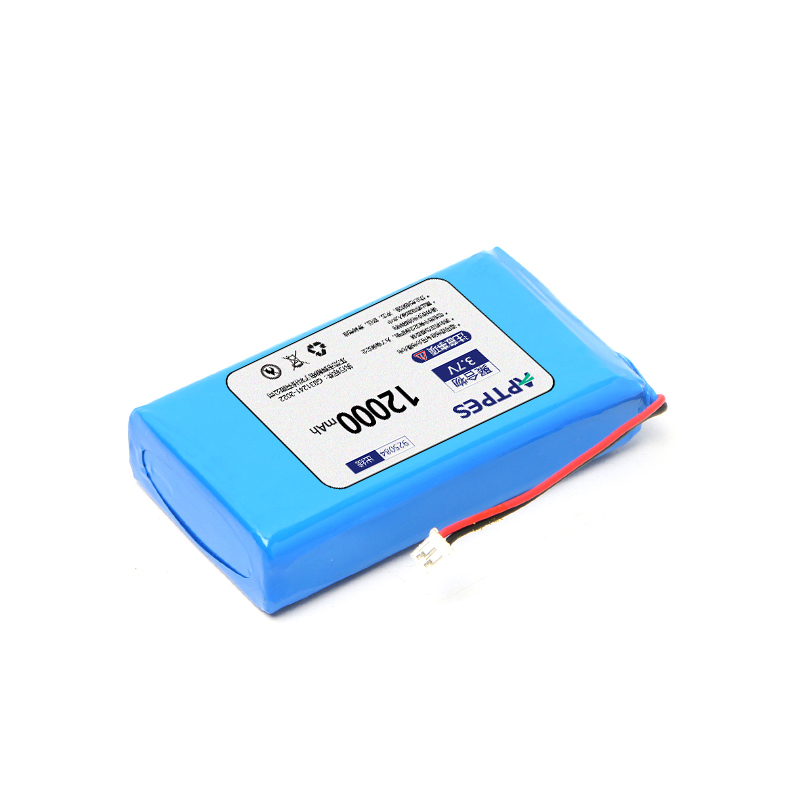
A robust Battery Management System functions as the digital brain. It represents the most critical failure point in small-capacity units. Many buyers ignore this hidden component. You must treat it as an absolutely non-negotiable requirement. A failed BMS renders the internal cells completely useless. It protects your investment from daily operational hazards.
We demand specific critical protections from any viable unit. Follow these essential criteria:
The BMS also handles internal cell balancing. It constantly monitors individual cell voltages inside the housing. It bleeds off excess voltage from higher-charged cells. This active or passive balancing ensures uniform charging across the board. Proper balancing extends the usable life of your 12000mAh Lithium Battery pack significantly. Units lacking proper balancing will drift out of sync over time. They will ultimately fail prematurely.
Best Practice: Always verify low-temperature cutoff functionality by reading the technical data sheet. Common Mistake: Assuming all lithium units contain cold-weather protection. Many budget brands omit this vital temperature sensor entirely.
Marine and sailboat deployments face exceptionally harsh conditions. Salt-fog corrosion attacks exposed contacts aggressively. High ambient humidity penetrates cheap plastic casings. You must require IP65 or IP67 rated sealed units. These rigorous ratings block water intrusion effectively. They ensure internal circuit boards remain dry and functional. Manufacturers achieve these ratings using heavy-duty rubber gaskets and sonic welding techniques.
RV and golf cart modifications introduce severe mechanical stress. High-frequency axle vibration loosens internal solder joints. Sudden off-road shocks can fracture delicate spot welds. Look for units featuring internal structural bracing. Better manufacturers use specialized epoxy potting compounds. They pour this hardening resin directly around the sensitive cells. It completely immobilizes internal components against violent shaking.
You must adhere to strict installation caveats. Never mount lithium power sources inside enclosed engine compartments. Internal combustion engines generate massive localized heat. High ambient heat triggers thermal sensors constantly. It degrades internal chemistry rapidly. Always check manufacturer temperature thresholds before drilling mounting holes. Exceeding these thermal limits voids warranties. It risks catastrophic system failure. Ensure adequate ventilation around the mounting tray.
Spotting fakes requires simple math and physical inspection. You must verify capacity claims independently. Use the standard weight test rule first. A true 12V 12Ah LiFePO4 unit carries a highly predictable mass. It should weigh approximately 2.5 to 3.5 lbs (1.1 to 1.6 kg). Extreme deviations warrant intense skepticism. Aggressively lightweight units usually contain smaller, recycled cells packed in empty space.
Demand teardown transparency from vendors. Favor brands publishing internal teardown videos on their official channels. Look for structural schematics on their websites. Independent third-party testing data provides excellent verification. Transparent manufacturers proudly display their internal wiring gauges and BMS boards. Secretive brands hide behind glued casings.
You must translate warranty documents carefully. Break down pro-rated versus full-replacement coverage. A 5-year warranty often hides costly conditions in the fine print. It becomes entirely meaningless if return shipping falls on you. Excessive factory testing fees ruin the overall value proposition. Read user reviews specifically focusing on warranty claim experiences.
Follow our simple next-step actions. Use this actionable 3-point checklist when comparing product spec sheets:
Upgrading to a high-quality 12000mAh Lithium Battery delivers massive advantages. You gain significant weight savings and exceptional operational reliability. You must evaluate your options strictly on BMS quality and true physical capacity. Avoid making decisions based solely on flashy marketing.
We advise prioritizing manufacturer transparency. Environmental durability matters significantly more than securing the lowest initial price point. Cheap, unverified units ultimately fail when stressed in real-world environments. They leave you stranded without power when you need it most.
Take direct action to upgrade your systems today. Calculate your specific current draw requirements precisely. Contact technical sales engineers for bulk or custom OEM sourcing needs. You can explore curated product pages matching these strict technical criteria to guarantee optimal performance.
A: You must always check manufacturer specification sheets first. Many standard BMS units support parallel wiring to increase overall runtime. However, some strictly prohibit series wiring. Connecting incompatible units in series destroys the internal BMS components instantly. Always verify the maximum allowed configuration before connecting multiple packs together.
A: Yes, you require a lithium-specific charge profile. Standard lead-acid chargers use desulfation modes. These modes push high voltage spikes. High voltages trigger the BMS safety disconnects immediately. A proper LiFePO4 charger provides constant current followed by constant voltage. It reaches full capacity safely without damaging internal cells.
A: Many manufacturers advertise drop-in replacements. You still need to verify spatial dimensions carefully. A 12000mAh unit generally matches standard SLA group sizes. However, lithium maintains a higher resting voltage. You must confirm your connected equipment can handle sustained 12.8V to 13.2V inputs safely.
A: You can determine runtime using a simple math formula. First, calculate Watt-hours by multiplying Volts by Amp-hours (12V x 12Ah = 144Wh). Next, divide this total by your device's wattage draw. A 12-watt device runs for roughly 12 hours. Always factor in a 5% efficiency loss for realistic estimates.


