

Views: 0 Author: Site Editor Publish Time: 2026-07-21 Origin: Site


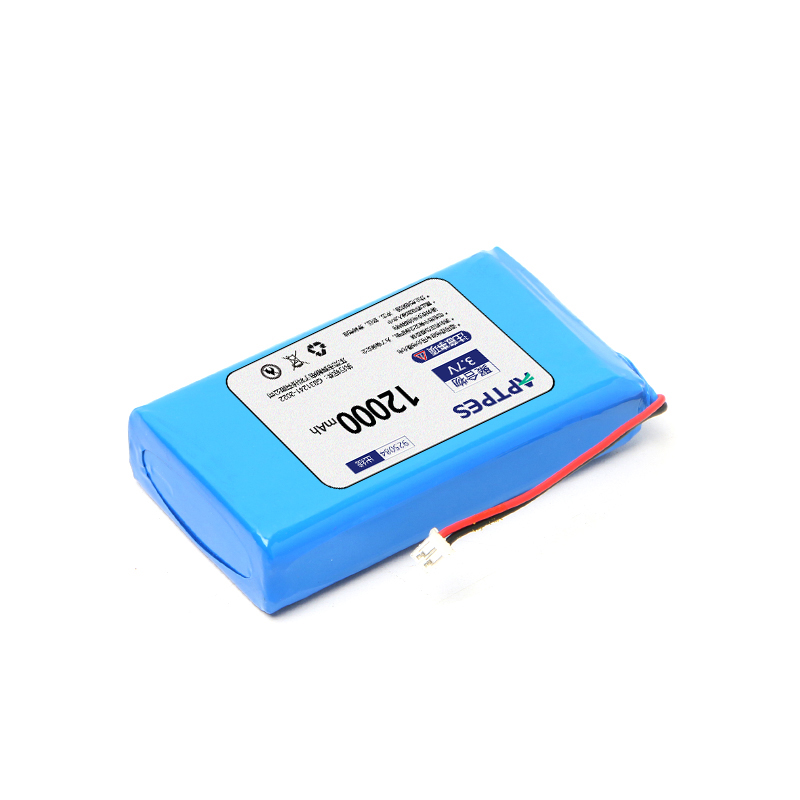
A 12000mAh (or 12Ah) capacity forms the sweet spot for many applications. You will find the market flooded with conflicting specifications today. Manufacturers use varying chemistries across different devices. They also make exaggerated performance claims. A 12000mAh Lithium Battery carries a dual intent in the market. It usually describes a 5V portable power bank for consumer electronics. Alternately, it describes a 12V or 12.8V LiFePO4 deep-cycle unit. People use these deep-cycle units for fish finders, mobility scooters, and golf cart accessories. Clarifying this split prevents frustrating purchases.
To make a secure purchase, you must evaluate cell chemistry and internal protections. You should also check physical implementation constraints. We will explore how to navigate these technical factors. You will learn to avoid capacity traps. You will discover exactly how to match the right power source to your specific needs instead of shopping on price alone.
Buyers often face confusion right at the start of their search. The exact user problem dictates which battery category you actually need. You must divide the market into two distinct application paths.
You might wonder about the "12000mAh" versus "12Ah" nomenclature. They represent the exact same capacity mathematically. You simply divide 12000 by 1000 to get 12. However, deep-cycle manufacturers typically use "12Ah" on their spec sheets. Consumer electronics brands use "12000mAh" because larger numbers look more impressive to average shoppers. Understanding this terminology helps you filter search results efficiently.
You must select the correct cell chemistry for your device. Lithium Iron Phosphate (LiFePO4) serves as the industry standard for 12V applications. It provides exceptional safety and longevity. You can typically expect 3,000 to 4,000 charge cycles at an 80% Depth of Discharge (DoD). LiFePO4 cells resist thermal runaway. They remain stable even under heavy loads or high temperatures.
Standard Lithium-Ion (NMC) batteries offer higher energy density. They pack more power into a smaller physical space. Manufacturers reserve them for compact power banks. However, they deliver a much shorter lifespan. You usually get only 300 to 500 charge cycles before performance degrades noticeably.
We can summarize the differences in the table below to aid your decision.
| Feature | LiFePO4 (Deep Cycle) | Standard Li-ion (NMC) |
|---|---|---|
| Typical Voltage | 12.8V (using four 3.2V cells) | 3.7V (boosted to 5V for USB) |
| Cycle Life | 3,000 - 4,000 cycles | 300 - 500 cycles |
| Thermal Stability | Excellent (Very high safety) | Moderate (Requires strict cooling) |
| Primary Use Case | Motors, marine, gate openers | Phones, tablets, USB gadgets |
A bare lithium cell requires electronic supervision. A credible battery includes a built-in Battery Management System (BMS). This circuit board acts as the brain of the battery. It actively prevents catastrophic failures.
You must also evaluate the Discharge Rate (C-Rate). The C-Rate defines continuous versus peak discharge capabilities. A standard 12Ah battery with a 1C rating can output 12 Amps continuously. If your equipment demands 15 Amps to run, a 1C battery will trigger the BMS to shut down. Always check your device requirements against the continuous rating.
Capacity specs often mislead buyers. For 12V deep-cycle usage, lithium offers near 100% usable capacity. You can safely drain it almost completely. In contrast, older lead-acid batteries should only drain to 50% capacity. This means a 12Ah lithium unit provides double the actual runtime of a 12Ah lead-acid unit.
For 5V power banks, you face conversion loss. Internal 3.7V cells must boost their voltage to meet the 5V USB output standard. This electronic conversion generates heat and wastes energy. A 12000mAh power bank realistically yields around 8,000 to 8,500mAh of actual charging capacity.
The following chart illustrates the conversion realities.
| Capacity Conversion Chart (Power Bank Efficiency) | ||
|---|---|---|
| Advertised Capacity | Internal Voltage -> Output | Real Usable Output (Estimated) |
| 12000mAh | 3.7V boosted to 5.0V | ~8,100mAh |
| 10000mAh | 3.7V boosted to 5.0V | ~6,800mAh |
The battery market contains many dishonest listings. Unbranded e-commerce sellers frequently misrepresent their products. You need practical ways to verify specifications before buying.
You should apply the weight-to-capacity sanity check. Genuine lithium cells possess a specific energy density. They have a predictable physical weight. If an unbranded listing promises 12000mAh in an impossibly light plastic housing, it is likely a fake. You cannot cheat the laws of physics.
You must also watch out for misleading peak ratings. Many sellers market "peak" amperage as a continuous capability. A battery might handle a 20 Amp spike for three seconds to start a motor. However, it might only sustain 10 Amps continuously. Relying on peak ratings for continuous loads causes instant system failures.
Look for verifiable compliance markers. You want independent certification rather than unverified vendor claims. UN38.3 certification ensures safe transport. UL-recognized cells indicate rigorous safety testing. CE marks show compliance with basic electronic standards.
Upgrading to lithium requires physical planning. You cannot just force a new battery into an old compartment. You must measure everything carefully.
Many users replace traditional 12V 7Ah or 9Ah SLA (Sealed Lead Acid) batteries. You must verify the new 12000mAh lithium unit shares the exact physical dimensions. It usually matches standard SLA casing sizes. Pay special attention to terminal types. Small batteries often use F2 spade connectors. Larger systems might require M5 bolts. Mismatched terminals force you to cut and crimp new wires.
You should address scalability if you plan to expand. Sometimes you need to wire two 12V 12Ah batteries for a 24V system. Alternatively, you might wire them parallel for 24Ah at 12V. Explicitly check if the manufacturer's BMS allows series or parallel configurations. Many budget BMS boards will fault out under these setups. They detect the opposing voltage and trigger a protective shutdown.
Charge controllers matter immensely. Lithium batteries require specific Constant Current / Constant Voltage (CC/CV) charging profiles. You cannot use a legacy lead-acid charger. Lead-acid chargers feature desulfation modes. These modes pulse high voltages into the battery. This damages lithium cells instantly. It triggers the BMS to permanently lock the battery.
A reliable battery comes from a reliable company. You should treat warranties as a direct proxy for build quality. Cheap components fail quickly. Manufacturers know this. A reputable 12V 12000mAh LiFePO4 battery should carry a 3-to-5-year warranty minimum. Power banks should offer at least 18 months of coverage.
You must prioritize local support and documentation. Generic marketplace imports offer zero after-sales help. Look for brands providing transparent spec sheets. They should list the maximum charge current clearly. They should detail the discharge cut-off voltage. They must outline safe operating temperatures. Reachable technical support saves you from prolonged equipment downtime.
Take specific next steps to narrow your options. First, measure your physical battery compartment. Second, write down your device's continuous amp draw. Third, shortlist two or three brands. Ensure they feature verified regional support and use UL-listed internal cells.
Upgrading your equipment to a lithium-based solution represents an investment in longevity. You gain significant weight reduction and consistent power delivery. Relying on verified specs rather than flashy marketing ensures safe operations.
A: You calculate runtime using Watt-hours (Wh = Ah × Voltage). A 12.8V 12Ah battery holds roughly 153.6 Wh. If your device draws 1 Amp continuously at 12 Volts, it consumes 12 Watts per hour. You divide 153.6 by 12, yielding approximately 12.8 hours of total runtime.
A: No. Standard lead-acid chargers use different voltage profiles. They often include a desulfation phase that spikes voltage rapidly. This action damages lithium cells. It forces the built-in BMS to trigger an emergency shutdown, potentially ruining the battery.
A: Yes. The metric conversion dictates that 1000 milliampere-hours (mAh) equal 1 ampere-hour (Ah). Consumer electronics brands prefer "12000mAh" for marketing appeal. Deep-cycle battery manufacturers prefer "12Ah" for engineering clarity. They represent identical capacities.
A: The internal Battery Management System (BMS) likely triggered a protective shutdown. This happens due to low-voltage limits, excessive heat, or an over-current draw. If your device pulls a peak current higher than the BMS rating, it instantly cuts power to prevent damage.


