

Views: 0 Author: Site Editor Publish Time: 2026-07-04 Origin: Site


Specifying power sources for modern devices often feels complex and risky. A Single Lithium Battery usually stands out as the default power choice. However, misunderstanding its specific chemistry, lifecycle, or safety profile frequently causes catastrophic device failures. You cannot afford compliance issues when scaling production.
In engineering contexts, this terminology creates immediate confusion. It might denote a single-cell configuration, like a standalone rechargeable 18650 unit. Alternatively, it refers to a single-use, non-rechargeable primary lithium cell. Clarifying this distinction determines your entire design path.
This article provides a rigorous, evidence-based framework for evaluating these power sources. You will learn how to match energy density and discharge rates with specific drain requirements securely. We will also explore crucial safety standards and lifecycle logistics to ensure successful, compliant implementation.
Procurement and engineering teams frequently encounter ambiguity regarding battery terminology. This confusion routinely causes misaligned sourcing. We must establish clear technical boundaries immediately. Distinguishing between a primary cell and a secondary single cell forms the foundation of reliable product development.
Primary batteries utilize lithium-metal chemistry. They remain strictly non-rechargeable. Once depleted, you must discard them. These cells use pure metallic lithium as the anode. This composition provides an exceptionally high energy density.
Their most defining trait is an extremely low self-discharge rate. They can sit on a shelf for ten to twenty years while retaining most of their original capacity. Furthermore, they demonstrate superior performance across extreme temperature ranges. You will find them functioning perfectly in sub-zero industrial freezers or scorching desert environments.
When evaluating these power sources, view them through a specific lens. They represent the best choice for low-drain, long-term devices. You should specify them exclusively when routine charging proves impossible or highly impractical.
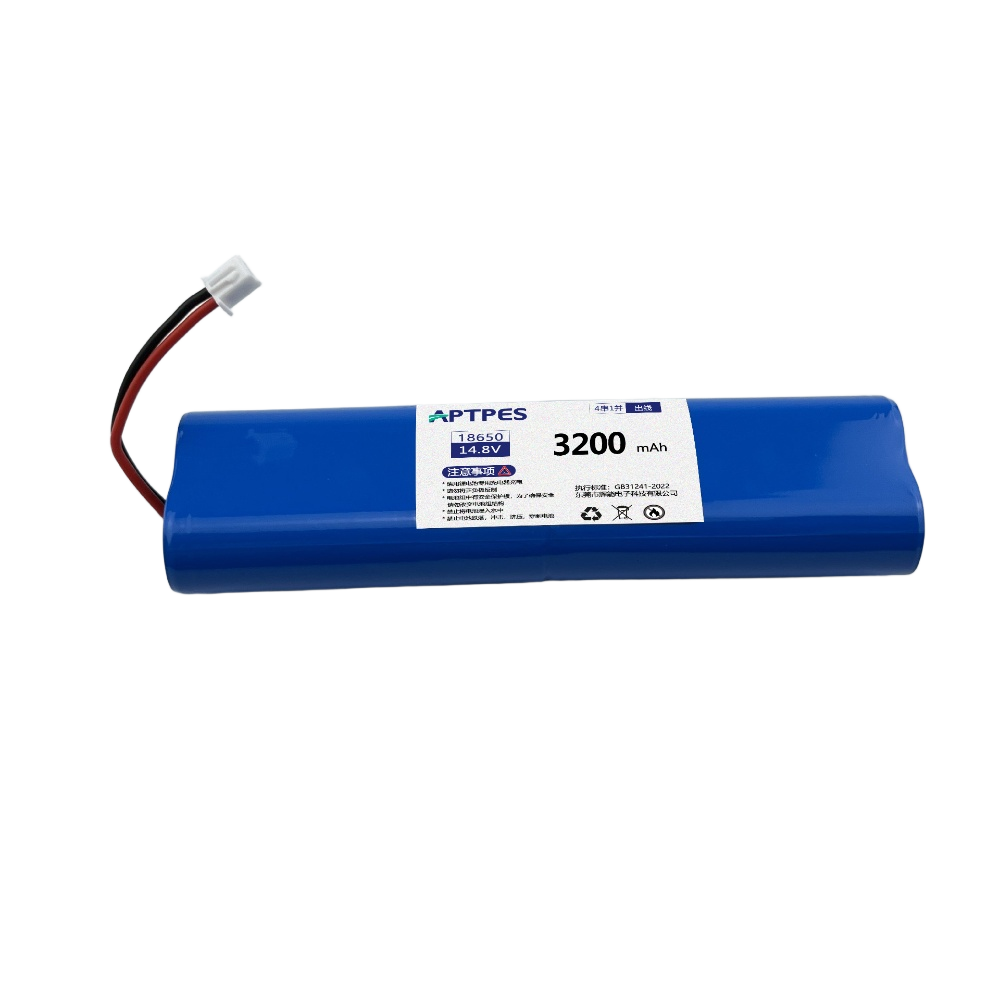
Secondary batteries rely on lithium-ion (Li-ion) chemistry. Instead of metallic lithium, they use intercalated lithium compounds. We typically see them deployed in standard single-cell formats like the ubiquitous 18650 or the larger 21700 cell. These numbers denote their physical dimensions.
These cells offer a high cycle life. You can discharge and recharge them hundreds or thousands of times before significant degradation occurs. They provide a massive rechargeable capacity. However, they demand a more robust initial investment regarding circuitry and safety modules.
You should evaluate secondary cells for high-drain applications. They fit best inside devices requiring frequent, sustained power delivery. If your product draws heavy continuous current, a single rechargeable cell provides the necessary stamina.
| Feature | Primary (Single-Use) | Secondary (Rechargeable) |
|---|---|---|
| Chemistry | Lithium-Metal (e.g., LiSOCl2, LiMnO2) | Lithium-Ion (e.g., LCO, LFP, NMC) |
| Rechargeability | Non-rechargeable | Rechargeable (500-2000+ cycles) |
| Self-Discharge Rate | Extremely low (often <1% per year) | Moderate (2-5% per month) |
| Optimal Drain Profile | Low, pulsed, or intermittent drain | High, continuous, or heavy drain |
| Lifespan Expectancy | 10 to 20 years (device dependent) | 2 to 5 years (cycle dependent) |
We must map the technical capabilities of a Single Lithium Battery to tangible business and consumer applications. Identifying the correct solution category prevents critical design failures later. Different industries demand vastly different performance metrics from their power sources.
The Internet of Things (IoT) relies heavily on dispersed, autonomous sensors. Common use cases include remote environmental monitors, underground smart meters, and deep-sea tracking beacons. Additionally, the medical field uses them for critical implants like pacemakers. Memory backup systems on industrial motherboards also depend on this technology.
Primary lithium cells fit these applications perfectly. These deployments require decade-long lifespans without human intervention. Sending a maintenance technician to replace a battery inside an underground water meter proves highly inefficient. The exceptional longevity and temperature resilience of lithium thionyl chloride (LiSOCl2) cells justify their specific selection here.
Consumer and commercial electronics demand immediate, heavy power surges. You see these requirements in high-lumen tactical flashlights, handheld power tools, and portable electronic gimbals. Medical devices like portable defibrillators also draw massive instantaneous current.
These applications fit secondary single-cell lithium-ion batteries. Continuous current draw requires robust discharge capabilities. A standard alkaline or primary lithium cell would voltage-sag and fail under these loads. Rechargeable cells easily push 10 to 30 amps of continuous discharge. They keep demanding motors turning and bright LEDs illuminated without faltering.
Evaluating different battery specifications against operational requirements remains challenging. You must avoid over-engineering your device while ensuring it functions flawlessly. Applying a strict decision framework helps you navigate dense manufacturer specification sheets.
You must balance how much energy the battery holds against how long it lasts before degrading. Capacity dictates runtime. We measure this capacity in milliampere-hours (mAh). However, packing maximum capacity into a small cell often reduces its total cycle lifespan or limits its maximum discharge rate.
Match the rated capacity directly to your device's actual consumption profile. If your device only needs to run for two hours before a guaranteed recharge, do not specify an ultra-high-capacity cell. Choose a cell optimized for cycle longevity instead. Over-specifying capacity often forces compromises in thermal stability or physical safety.
Maintaining a flat discharge curve is incredibly important. Many electronic components require a steady minimum voltage to operate. If the battery voltage drops linearly as it depletes, the device might shut down while 40% of the energy remains inside the cell. Lithium chemistries generally excel at holding a flat voltage until nearly empty.
Consider the pulse-discharge requirements of your specific application. When an IoT device wakes up to transmit data via a cellular modem, it pulls a sudden, harsh pulse of current. This pulse dictates the specific internal resistance needed in the battery. High internal resistance causes a sudden voltage drop during a pulse, instantly resetting the microcontroller. You must select a cell with low enough internal resistance to handle these transmission spikes.
| Evaluation Metric | Primary Consideration | Common Mistake to Avoid |
|---|---|---|
| Rated Capacity (mAh) | Match to device runtime needs | Chasing highest mAh while ignoring cycle life |
| Max Continuous Discharge | Ensure it exceeds device peak draw | Using low-drain cells in high-drain motors |
| Internal Resistance (IR) | Lower IR for heavy pulse loads | Ignoring IR, leading to device resets |
| Operating Temperature | Map to worst-case environment | Assuming room-temperature specs apply everywhere |
Addressing the inherent risks of lithium technology requires an evidence-oriented, skeptical approach. You must never downplay these risks. Storing dense energy in a small volume presents significant physical hazards. Understanding these mechanisms ensures safer product designs and protects end users.
Thermal runaway represents the most severe failure mode for single lithium cells, particularly Li-ion variants. It occurs when an internal short circuit or external heat source causes the cell's internal temperature to rise uncontrollably. The chemistry breaks down, releasing oxygen, which feeds the subsequent fire. This chain reaction happens in seconds.
To mitigate these risks, reputable cells incorporate necessary safety mechanisms. You must verify these features during sourcing:
Transportation authorities classify lithium batteries as dangerous goods. You must navigate strict UN38.3 testing requirements before shipping them internationally. This framework mandates eight rigorous tests. The battery must survive altitude simulation, extreme thermal cycling, severe vibration, and mechanical shocks. It also undergoes tests for external short circuits, impacts, overcharging, and forced discharge. Without a valid UN38.3 certificate, freight forwarders will reject your shipments.
End-of-life management carries heavy regulatory burdens. You cannot treat depleted lithium cells as standard municipal waste. Local environmental guidelines mandate strict compliance. The Environmental Protection Agency (EPA) and state-level Departments of Environmental Conservation classify them as universal or hazardous waste. Throwing them in the trash causes fires in garbage trucks and recycling centers. You must establish compliant disposal workflows.
Move beyond the initial unit to evaluate the long-term logistical and reputational impacts of battery selection. Scalability requires smooth implementation realities. Constantly swapping power sources creates immense operational friction. You must calculate the comprehensive effort required to keep a fleet of devices running over five or ten years.
Evaluating replacement logistics reveals the true effort behind a deployment. A primary cell might seem simpler initially, but you must factor in the recurring operational burden. Consider a deployment of five thousand remote IoT sensors in a forest. Calculating the lifecycle effort involves:
Compare the constant replacement of single-use batteries against a rechargeable ecosystem. A secondary cell combined with a small solar panel eliminates replacement trips entirely. Even though the rechargeable cell requires more complex initial circuitry, it drastically reduces long-term field maintenance.
We see growing market and regulatory pushback against single-use lithium batteries. Consumers and environmental groups heavily criticize the "throwaway" culture associated with primary cells. Mining lithium requires significant water and ecological resources. Discarding it after one use contradicts modern sustainability goals.
Opting for sustainable battery management plans improves brand credibility. You meet stringent Environmental, Social, and Governance (ESG) criteria by designing for recyclability. When you specify rechargeable cells, you drastically reduce the sheer volume of hazardous waste generated. Partnering with certified e-waste recyclers further strengthens your environmental posture. Consumers actively look for brands demonstrating this level of lifecycle responsibility.
Specifying a single lithium battery requires balancing complex energy demands, strict safety compliance, and long-term lifecycle logistics. You cannot treat these power sources as simple commodities. A poorly chosen cell will ruin a great device design, either through premature failure or catastrophic thermal events.
Decision-makers should thoroughly audit their device's power draw before finalizing a supplier. Map out the exact environmental operating conditions, including temperature extremes and pulse demands. Calculate a five-year operational roadmap to understand replacement frequencies and logistical burdens.
Take action today by requesting detailed specification sheets from potential vendors. Ask specifically for valid UN38.3 certification documents. Finally, always order sample cells for in-house environmental testing before committing to large-scale manufacturing. Real-world validation remains your best defense against failure.
A: It depends on the specific chemistry. A primary lithium-metal battery cannot be recharged; attempting to do so poses a severe fire risk. A secondary lithium-ion battery (like an 18650 cell) is specifically designed to be recharged hundreds or thousands of times safely.
A: Shelf-life often exceeds 10 to 15 years due to extremely low self-discharge rates. However, operational life depends entirely on your device's drain rate. A low-drain IoT sensor might run for 10 years, while a heavy pulse-drain device might deplete it in months.
A: Yes, but only under strict regulations. IATA guidelines require cells to pass UN38.3 safety testing. Furthermore, rechargeable cells must be shipped at a state-of-charge not exceeding 30%. They require specialized hazard packaging and clear external labeling to alert freight handlers.
A: You must never throw them in standard municipal trash. Doing so causes dangerous fires in sanitation trucks and landfills. You must take them to certified e-waste recycling facilities or use battery take-back programs that comply with EPA and local environmental regulations.


