

Views: 0 Author: Site Editor Publish Time: 2026-07-05 Origin: Site


Engineering teams face a critical crossroads early in product development. Choosing the right power storage format remains a persistent challenge. The lines often blur between sourcing bare energy units and finished power packs. This confusion routinely disrupts manufacturing schedules. Selecting the wrong power format can cause certification delays. It can also blow up your R&D budget or cause severe product safety failures.
You must understand the technical and regulatory differences immediately. This knowledge protects your product launch timeline. It also prevents dangerous field failures. We designed this guide to eliminate procurement guesswork. You will receive a clear decision framework. We will help engineers and procurement managers evaluate their options. You will learn exactly when to engineer a custom solution from raw components. You will also discover when to integrate a pre-engineered Single Lithium Battery. Your team can then proceed confidently.
Many industry professionals use the terms interchangeably. However, engineers must recognize the strict physical differences. The distinction directly impacts safety, design, and regulatory approval.
A lithium cell serves as the raw electrochemical building block. It contains four primary internal components. These include the anode, cathode, separator, and liquid or solid electrolyte. The cell stores energy electrochemically. However, it lacks any external safety circuits. This absence makes raw cells inherently vulnerable. Mishandling them causes severe risks. Overcharging a raw unit can trigger thermal runaway. A physical puncture often results in fire. You cannot safely plug a raw cell directly into a commercial device.
A battery represents the finished, usable product. It transforms the volatile raw energy into a stable power source. Creating a complete system requires mandatory additions. Engineers must integrate a Battery Management System (BMS). They must also add specialized wiring and thermal insulation. Finally, they encase the components inside a protective external housing. These additions prevent electrical faults. They shield the internal chemistry from environmental damage. You plug a finished battery directly into the end application.
Some devices require very little power. They might only need one cell to operate. However, this single unit still requires protection. Manufacturers combine one cell with a dedicated BMS. They wrap it in protective shrink-wrap or a hard plastic shell. Even this simple configuration becomes a "battery." Once you integrate protective circuitry, the terminology shifts. You finalize it for device integration. A pre-certified Single Lithium Battery delivers safe, reliable power without the bulk of multi-cell packs.
| Feature | Raw Lithium Cell | Complete Lithium Battery |
|---|---|---|
| Core Components | Anode, cathode, electrolyte, separator | Cell(s), BMS, wiring, external casing |
| Built-in Safety | None (Requires external management) | Integrated (Overcharge/short-circuit protection) |
| Usability | Needs engineering integration | Ready for plug-and-play use |
| Certification Level | Component-level (e.g., UL 1642) | System-level (e.g., UL 2054, UN38.3) |
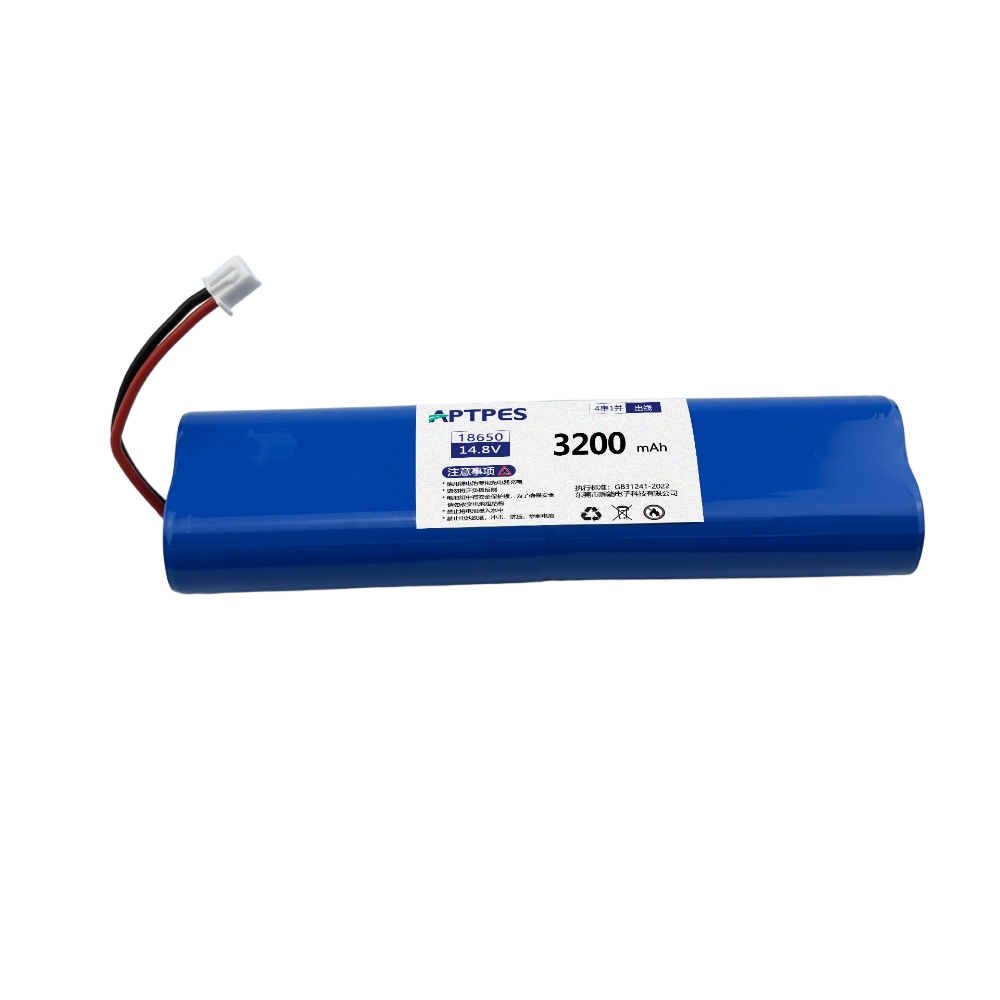
Engineering limits directly dictate commercial outcomes. You must evaluate your organizational strengths honestly. Choosing between raw components and finished packs requires objective analysis.
You must evaluate your internal team first. Do you have dedicated electrical and mechanical engineers? Designing safe power enclosures demands specialized knowledge. Your engineers must understand custom BMS logic thoroughly. They also need deep mechanical expertise. Designing plastics for drop-test survival is difficult. If your team lacks this specific bandwidth, custom integration creates massive risk. Offloading this work usually makes the most sense.
Every project balances upfront investment against per-unit production costs. Developing a custom pack from bare cells requires high Non-Recurring Engineering (NRE) costs. You pay heavily for initial design, prototyping, and tooling. Alternatively, purchasing an off-the-shelf pack shifts this dynamic. You avoid massive upfront NRE expenses. However, you accept a slightly higher per-unit cost. For many projects, avoiding huge initial investments preserves capital. It keeps your budget flexible.
Speed often determines market dominance. Building a custom power solution takes months. You must design the circuit, build prototypes, and run endless tests. Failed tests restart the cycle. Conversely, integrating an existing power pack accelerates your launch. Pre-certified options eliminate months of waiting. You skip the grueling safety testing phase. This acceleration gets your product into customers' hands faster.
Every physical device imposes unique constraints. Engineers must evaluate safety, regulations, and physical space limits. Let us break down these critical dimensions.
Raw units carry a volatile risk profile. They require active monitoring design from scratch. Your engineering team must invent the safety net. A single mistake could cause catastrophic fires. On the other hand, an integrated system neutralizes these threats. A finished Single Lithium Battery comes equipped with a tested BMS.
A reliable BMS must include several mandatory protective features:
Navigating global compliance standards frustrates many teams. You must distinguish between component-level and system-level approvals. Raw components achieve certifications like UL 1642. This only proves the bare unit is safe under laboratory conditions. It does not cover your finished product. Finished power systems require battery-level certifications. Standards like UL 2054 or IEC 62133 dictate system safety.
Shipping presents another major hurdle. Global transport laws strictly regulate lithium products. The UN38.3 standard governs air, sea, and ground transport. Buying pre-certified finished packs shifts the compliance burden entirely. The vendor handles the UN38.3 testing. They provide the passing certificates. You simply attach their documentation to your shipment. Ground-up integration forces you to manage these expensive tests yourself.
Physical design involves inherent trade-offs. Standard off-the-shelf power packs restrict your form factor innovation. You must design your device cavity around their exact dimensions. Raw components offer vastly more freedom. You can configure them into custom shapes. This flexibility benefits contoured IoT devices or ultra-thin wearables.
Supply chain scalability also matters immensely. Custom assembly usually requires massive Minimum Order Quantities (MOQs). Factories will not retool their lines for small runs. Sourcing standard SKUs provides far better flexibility. You can order small batches for prototyping. You can scale up quickly as demand increases. You never face crippling inventory minimums.
Theoretical plans often collapse during actual manufacturing. You must anticipate common implementation traps. Ignoring these realities causes severe production delays.
Many teams underestimate bespoke design expenses. The raw unit itself appears cheap. The surrounding infrastructure is not. You must pay tooling fees for custom plastic enclosures. These molds cost thousands of dollars. You also need a custom PCB layout for the BMS. Iterative safety testing failures multiply these costs quickly. Failing an EMI/EMC test requires board redesigns. Each redesign requires another expensive testing round. These hidden costs destroy tight project budgets.
Buying off-the-shelf creates a different risk. You might design your entire product cavity around one proprietary format. If that vendor goes bankrupt, you face a crisis. If they face supply chain disruptions, your production line stops. Worse, the vendor might declare an End-of-Life (EOL) for that specific SKU. You must suddenly redesign your product housing. Smart teams mitigate this. They design their internal cavity to accept multiple standard footprints. They never rely entirely on a single proprietary shape.
Heat destroys electronics. Dissipating heat becomes extremely difficult in tight spaces. When you package raw units tightly within compact commercial devices, heat becomes trapped. The internal resistance generates thermal load during rapid discharge. If you fail to design proper heat sinks, the unit degrades rapidly. It might swell or leak. Pre-engineered packs often include built-in thermal spacing. They use specialized insulative tapes and conductive pathways. Replicating this thermal management in-house frustrates many novice engineering teams.
Your team needs a decisive path forward. You must weigh volume, timeline, and capability. Use the following logic to finalize your strategy.
We recommend sourcing bare units only under specific conditions. You need high-volume manufacturing to justify the effort. If you produce upwards of 50,000 units per year, this path makes sense. At massive scale, unit-cost optimization outweighs initial R&D expenses. You also choose this path for extreme physical constraints. If your device requires an incredibly unusual shape, standard packs will fail. You must commit to building an expert internal battery team.
Most projects fall into a different category. We highly recommend this path for low-to-medium volume runs. It perfectly suits rapid prototyping phases. If your company lacks dedicated power engineering teams, do not attempt custom builds. Integrating a tested Single Lithium Battery minimizes your liability. It accelerates your timeline. You focus your engineers on your core product features instead.
If you choose to procure finished packs, choose your partners carefully. Do not buy from unverified sources. Evaluate them against strict mandatory criteria:
| Decision Factor | Custom Cell Integration | Standard Pack Integration |
|---|---|---|
| Annual Volume | High (50,000+ units) | Low to Medium |
| Engineering Team | Requires dedicated EE/ME staff | Requires minimal specialized staff |
| Time to Launch | Long (9-18 months) | Short (1-3 months) |
| Form Factor Flexibility | Maximum flexibility | Limited to standard dimensions |
Your final decision always bridges your engineering capability and your commercial strategy. You must evaluate your team's bandwidth honestly. Attempting custom integrations without deep expertise invites catastrophic failures. It guarantees blown budgets and missed deadlines. Conversely, leaning on established supply chains mitigates risk.
For most mid-market and rapid-deployment projects, specifying a tested power pack remains the safest route. It shifts the regulatory burden away from your team. It guarantees reliable safety features right out of the box. You avoid crushing NRE investments. Your team can launch faster and scale more predictably.
You should formalize your power requirements today. Map out your physical space constraints. Document your expected current draw and environmental operating temperatures. We encourage you to consult immediately with a qualified pack assembler. They will review your application-specific load profiles. They will help you navigate the exact regulatory requirements for your target markets.
A: We strongly advise against this. Using a bare unit without a BMS creates severe safety risks. It lacks protection against overcharging, deep discharging, or short circuits. These faults rapidly cause swelling, venting, or thermal runaway. Commercial applications require integrated protective circuitry to prevent dangerous field failures and ensure user safety.
A: Yes. The complete battery assembly must pass transport testing independently. Even if the underlying bare unit holds a UN38.3 certificate, the final pack requires a new certification. The addition of wiring, a BMS, and external housing alters the thermal and structural profile. The whole system must prove it withstands transit stress.
A: Cylindrical units look like standard AA batteries and offer excellent mechanical stability. Pouch formats use flexible foil packaging, allowing thin, custom shapes but requiring rigid external device enclosures. Prismatic formats use hard rectangular casings, efficiently maximizing space inside dense electronic devices. The physical format directly dictates your final product enclosure design.
A: Custom integration demands massive upfront engineering investments. You pay heavily for plastic mold tooling, custom PCB design, and repetitive compliance testing. Standard procurement dramatically reduces these costs. You leverage the vendor's existing design and certifications. You trade the high upfront investment for a slightly increased per-unit component cost.


