

Views: 0 Author: Site Editor Publish Time: 2026-06-26 Origin: Site


Battery manufacturers frequently quote best-case scenario lifespans on their specification sheets. We often see impressive numbers masking a much more complex operational reality. Real-world longevity depends heavily on the specific application, thermal management, and daily charging protocols. Transitioning from generic spec sheets to actual field performance remains a major challenge for many project managers.
The true lifespan of your energy storage directly dictates lifecycle ROI and essential operational uptime. Miscalculating these hidden variables can lead to unexpected equipment failures and heavily disrupted schedules. You need accurate data to maintain seamless operations.
We will demystify the core physics and variables impacting chemical degradation. You will discover engineering-backed baselines to understand how these systems degrade over time. This guide equips buyers with a highly practical framework to evaluate vendor lifespan claims effectively.
Industry professionals measure lifespan using a metric called State of Health (SOH). A battery generally reaches the end of its commercial lifespan when its capacity drops to 80% of its original rating. It does not suddenly fail or stop working completely. Instead, it simply stores less energy than it did when new.
Implementation reality presents interesting opportunities at this stage. Secondary use becomes highly viable. You can repurpose EV batteries for static solar storage or grid support. However, primary operational reliability drops significantly once SOH falls below 80%. Commercial fleets and critical infrastructure usually require immediate replacement at this threshold.
We must define a full charge cycle to understand degradation accurately. A single cycle occurs when you discharge a unit completely and recharge it back to maximum capacity. Partial discharges only count as partial cycles.
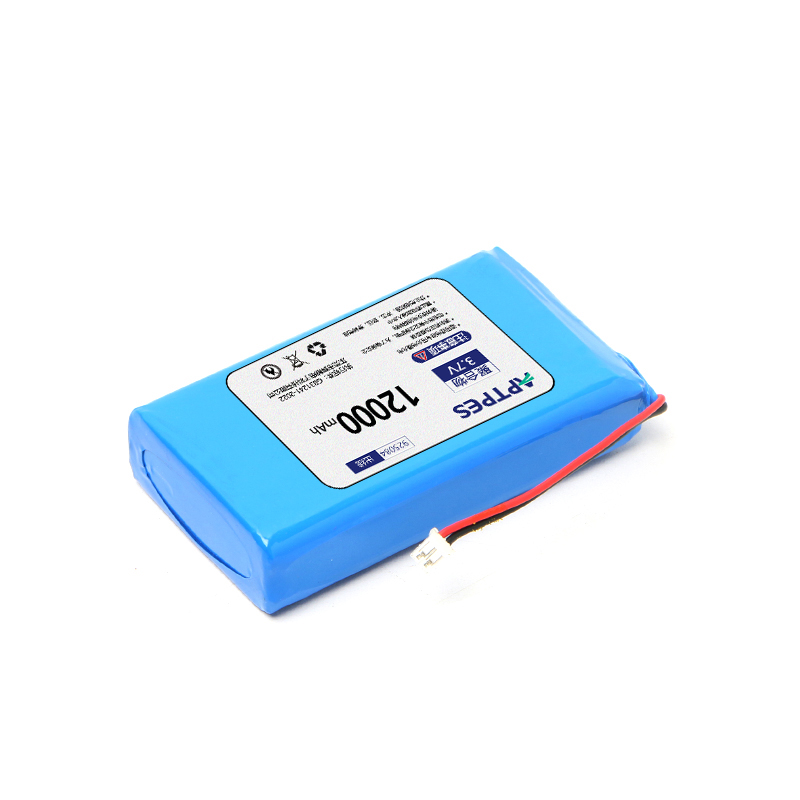
Baseline metrics vary by specific internal chemistry. Most industrial variants, specifically Lithium Iron Phosphate (LiFePO4), average between 3,000 and 6,000 cycles under optimal conditions. A well-engineered Lithium-ion Battery can readily achieve these impressive benchmarks when paired with proper management protocols.
Calendar life tracks natural chemical degradation over time. This aging happens regardless of daily usage or cycling. The internal chemistry slowly changes due to parasitic reactions inside the cells. Most industrial units yield a 10 to 15-year calendar life before degrading past the 80% SOH mark.
You must constantly verify your environmental assumptions. High-heat environments heavily accelerate calendar aging. A unit sitting entirely idle in a hot warehouse will degrade much faster than one operating daily in a climate-controlled facility. Temperature management dictates calendar life success.
Depth of Discharge heavily influences chemical longevity. We see a strict non-linear relationship between DOD and cycle life. Pushing a system to 100% depletion regularly causes maximum strain on the internal electrodes.
Limiting depletion exponentially increases your total usable cycles. Discharging to only 50% provides vastly more total lifetime energy throughput than full 100% depletion. Operations managers should configure their systems to avoid deep discharges whenever possible.
| Depth of Discharge (DOD) | Estimated Cycle Life (LiFePO4) | Degradation Impact |
|---|---|---|
| 100% DOD | 2,000 - 3,000 Cycles | Maximum stress on electrodes |
| 80% DOD | 4,000 - 5,000 Cycles | Balanced operational efficiency |
| 50% DOD | 6,000+ Cycles | Minimal chemical stress |
Lithium chemistry has a strict Goldilocks zone. It operates best between 15°C and 25°C (59°F to 77°F). Staying within this thermal window minimizes parasitic reactions and maintains optimal internal resistance.
Extreme temperatures introduce severe risk factors. Cold weather charging causes a dangerous phenomenon called lithium plating. Lithium ions fail to intercalate into the graphite anode and instead build up as metallic lithium. Conversely, extreme heat rapidly accelerates cathode degradation. Sustained high heat also introduces severe thermal runaway risks.
Charge and discharge speeds matter immensely. Engineers measure these speeds using C-Rates. A 1C rate means fully charging or discharging the unit in exactly one hour. Aggressive fast-charging utilizes high C-rates, which heavily stresses the internal chemistry by generating rapid heat spikes.
Fast-charging warehouse fleets often becomes an operational necessity. Operators cannot afford long downtime. You must balance this operational necessity against the cost of premature degradation. Proper active cooling systems help mitigate this specific stress factor.
| Charge Speed (C-Rate) | Time to Charge | Heat Generation Risk |
|---|---|---|
| 0.2C (Standard) | 5 Hours | Very Low |
| 0.5C (Moderate) | 2 Hours | Low to Moderate |
| 1.0C (Fast) | 1 Hour | High (Requires cooling) |
Different use cases demand different lifespan expectations. Enterprise solar storage requires reliable daily deep cycling. The system charges during peak sunlight and discharges throughout the evening. You should expect a functional lifespan exceeding 10 years for these arrays.
Your key focus involves managing DOD carefully during consecutive low-sunlight days. Prolonged cloud cover can force the system into dangerous deep discharge territory. Smart inverters help prevent this by pulling backup grid power before hitting critical DOD limits.
Heavy fleet operations utilize high-frequency opportunity charging. Forklift operators plug in during short 15-minute shift breaks. They rarely charge to 100% or discharge to 0%. Expect a highly reliable functional lifespan of five to seven years in these demanding environments.
Thermal management becomes your absolute primary focus here. Rapid multi-shift usage generates significant internal heat. The combination of heavy lifting and fast opportunity charging requires robust thermal dissipation to prevent premature cell failure.
Standby power systems face entirely different chemical constraints. Data centers and hospitals use these systems for emergency backup. They experience highly infrequent cycling. Your focus shifts away from cycle life and heavily toward calendar life.
Expect these static systems to last 10 to 15 years. You must strictly manage float charge protocols. Keeping a unit constantly at 100% voltage accelerates calendar aging. Lowering the standby float voltage slightly extends the operational life significantly.
An active Battery Management System remains absolutely critical. It acts as the brain of the energy storage unit. It actively protects the internal cells against dangerous over-voltage and under-voltage conditions. The BMS also monitors thermal extremes constantly, shutting down operations if temperatures exceed safe limits.
You must establish strict evaluation criteria during procurement. Never purchase an industrial unit lacking integrated cell balancing. Cell balancing ensures every individual cell charges and discharges evenly. Without it, one weak cell will drag down the entire system's capacity and lifespan.
Optimizing shelf life requires strict storage protocols. Long-term storage demands careful preparation to prevent deep discharge degradation.
These specific practices minimize severe stress on the internal chemistry. Storing at 50% SOC keeps internal voltage low enough to prevent chemical breakdown, yet high enough to survive natural self-discharge.
Implementation errors often ruin otherwise healthy systems. Operators frequently overlook basic engineering compatibility. You should actively avoid these common implementation mistakes:
Addressing these risks early ensures maximum return on your initial hardware investment.
Evaluating vendor claims requires strict attention to detail. You must deconstruct proposed warranties carefully. Sales brochures often highlight best-case scenarios while burying operational restrictions in the fine print.
Look for specific trust indicators in the paperwork. Excellent warranties stipulate both time and energy throughput. They might guarantee 10 years or 30 Megawatt-hours (MWh) total energy throughput. The warranty expires based on whichever milestone occurs first. This dual-metric approach proves the vendor understands true chemical degradation.
Certifications prove actual testing rigor. Do not accept internal vendor testing as the sole proof of safety or longevity. Always check for strict third-party compliance standards.
Look for UL 1973 compliance for stationary applications. Require UL 9540A testing to evaluate thermal runaway fire risks. Demand UN38.3 certification to ensure completely safe physical transport. These standards guarantee the unit survived severe physical and electrical stress testing.
Your shortlisting process requires precise engineering steps. Never purchase based solely on amp-hour ratings. You must audit your current facility power consumption patterns thoroughly first.
Calculate your required daily DOD based on actual load profiles. Determine how often you will cycle the system. Complete these analytical steps before ever requesting final vendor quotes. This preparation prevents you from significantly undersizing the system.
Lithium lifespan is not a fixed expiration date. It represents a highly manageable asset lifecycle. Managing thermal environments and depth of discharge limits provides undeniably superior operational results for any facility.
Take these actionable next steps to secure your investment:
A: It does not suddenly die. Commercial lifespan ends when capacity drops to 80% State of Health (SOH). The unit simply holds less charge and requires more frequent recharging. You can successfully repurpose these degraded units for secondary-life applications, like static solar storage, where energy density matters far less.
A: Keeping units constantly at 100% charge accelerates standby degradation. It heavily stresses the internal chemistry. You absolutely need a smart Battery Management System (BMS) to prevent harmful trickle-charge damage. The BMS automatically cuts off the current to protect the cells during continuous connection.
A: They can easily last several years in storage if properly maintained. Follow the 40-50% State of Charge (SOC) rule. Storing them partially charged minimizes internal chemical stress. They experience a natural self-discharge rate of 2-3% per month. Periodically check and recharge them to prevent irreversible deep discharge.
A: Aggressive fast charging accelerates wear on the internal cells. It generates excessive heat and stresses the internal chemical structure. However, high-quality thermal management mitigates this impact significantly. A robust active cooling system allows fast charging while keeping premature degradation risks at a highly manageable minimum.


