

Views: 0 Author: Site Editor Publish Time: 2026-07-25 Origin: Site


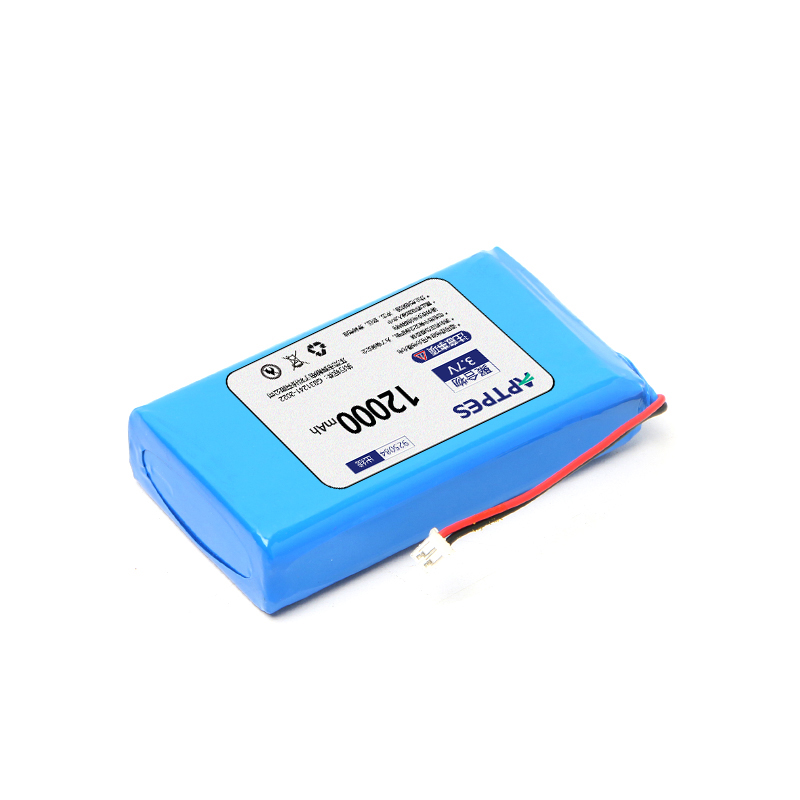
Upgrading small-scale power systems requires balancing capacity, weight, and footprint. You need enough energy to complete the task without adding cumbersome bulk to your setup. A 12000mAh Lithium Battery (commonly standardized as 12V 12Ah) is the industry standard sweet spot between extreme portability and reliable runtime. It packs massive energy density into a surprisingly compact external shell.
Rather than relying on outdated Sealed Lead Acid (SLA) technology, evaluate how integrating modern lithium chemistry transforms your daily equipment usage. It directly impacts continuous performance, cuts overall weight drastically, and delivers tremendous long-term returns across highly specific applications. You will learn exactly how to leverage this advanced power source for marine electronics, off-grid automation, and small recreational vehicles. We also cover crucial buying criteria and technical specifications to ensure you select a safe, long-lasting unit tailored to your exact needs.
Understanding the core specifications helps you maximize system efficiency. The rating "12000mAh" equals 12 Amp-hours (12Ah). When operating at a standard 12 volts, this configuration yields approximately 144 Watt-hours (Wh) of total energy. This metric dictates exactly how much continuous work the power source can perform before requiring a recharge.
You must contrast this directly with traditional 12V 12Ah Sealed Lead Acid (SLA) units to see the true value. Older SLA chemistry suffers from severe voltage sag under heavy loads. Due to the Peukert effect, they only offer about 50% usable capacity before their voltage drops too low to run sensitive electronics safely. Conversely, lithium iron phosphate (LiFePO4) chemistry maintains a remarkably flat voltage curve. You get 95% to 100% usable capacity. The power output remains steady and forceful from the first minute of operation until the very last drop of energy drains.
Physical weight serves as a critical success criterion for mobile field applications. A standard 12V 12Ah SLA block weighs over eight pounds. A modern 12000mAh Lithium Battery weighs roughly three pounds. Shedding five pounds completely changes mobility dynamics. You carry less dead weight in your gear bags. Your equipment becomes significantly easier to transport, install, and adjust on the fly.
| Performance Metric | Traditional SLA (12V 12Ah) | Lithium LiFePO4 (12V 12000mAh) |
|---|---|---|
| Usable Capacity | ~50% (72 Watt-hours) | ~95-100% (144 Watt-hours) |
| Average Weight | 8.5 lbs (3.8 kg) | 3.0 lbs (1.3 kg) |
| Voltage Curve | Gradual steep decline | Flat and stable until empty |
| Cycle Life | 300 - 500 cycles | 2000 - 5000 cycles |
Marine environments demand uncompromised reliability under harsh conditions. For fish finders and advanced marine electronics, fluctuating voltage presents a major operational problem. A fish finder transducer sends rapid sonar pulses to map the bottom structure. As lead-acid cells drain, their voltage drops steadily. This low power weakens the sonar ping, causing screen flickering, false depth readings, and sudden reboots. The flat voltage curve of lithium chemistry solves this entirely. It ensures pristine, accurate sonar performance over a full eight to ten-hour day on the water.
Kayak trolling motors also benefit immensely from this technological upgrade. In real-world implementations, a 12000mAh capacity serves as an excellent lightweight power source for short fishing trips. It also works perfectly as a dedicated secondary battery for electronic accessories, keeping the main vessel weight perfectly distributed. Heavy SLA blocks easily unbalance small watercraft and induce drag. A three-pound lithium unit sits seamlessly in tight hull compartments without altering the boat's center of gravity.
Ice fishing flashers require specialized attention regarding cold-weather operation. Lithium discharges efficiently in freezing temperatures, offering much longer runtimes than SLA equivalents on a frozen lake. However, risk mitigation remains essential. You must protect the internal cells from freezing while receiving a charge.
Remote automation and emergency response systems cannot fail when you need them most. Solar gate openers demand reliable standby power combined with rapid burst energy. A gate motor draws significant amperage instantly to swing heavy metal barriers. Older SLA units often fail after just two harsh winters due to deep discharge damage and freezing temperatures. When evaluating long-term reliability, lithium offers thousands of charge cycles. This robust lifespan eliminates the yearly replacement hassle in hard-to-reach outdoor enclosures. You install it once and rely on it.
For emergency lighting and small Uninterruptible Power Supply (UPS) setups, indoor compliance and safety take center stage. Legacy battery technologies can vent dangerous hydrogen gas during intense charging cycles. By contrast, lithium iron phosphate features a completely non-toxic chemistry profile. It lacks off-gassing entirely. This makes it exceptionally safe for enclosed indoor backup setups, tight hallway closets, and unventilated basement utility rooms.
Ham radio (amateur radio) operators require pristine power quality for portable transmission stations. The key performance metric here involves maintaining stable voltage under heavy transmission loads. When you key the microphone, the current draw spikes instantly. Aging lead-acid units suffer rapid voltage sag, which distorts the transmission signal or causes the radio to reset automatically. A 12000mAh Lithium Battery holds its voltage firm above 12.8V, ensuring maximum transmission power and crystal-clear audio.
Replacing factory-installed power sources in small recreational vehicles dramatically improves the user experience. Kids' ride-on toys, such as Power Wheels, serve as popular upgrade candidates. The immediate outcome is drastically longer playtime. More importantly, children experience consistent speeds until total depletion. Standard SLA blocks cause sluggish, frustrating performance as they drain. Lithium delivers full motor torque right up to the end.
Safety considerations remain paramount when upgrading toys. You must confirm the existing motor and internal wiring can handle a sustained higher voltage profile. Because lithium stays above 12.8V most of the time, it pushes current much faster. If a toy gets stuck in thick mud, the lower internal resistance of lithium might push too much power and overheat an older brushed motor. We highly recommend installing a 30-amp inline fuse to protect the vehicle's electrical harness.
Small mobility scooters represent another highly practical upgrade path. The primary shortlisting logic involves checking the physical dimensions (Length x Width x Height). Fortunately, manufacturers build these power sources to match exact Group 12 SLA casing standards. This thoughtful design ensures a seamless "drop-in" physical fit. You avoid cutting or modifying the scooter's internal plastic battery tray.
Not all energy storage units meet the same rigorous engineering standards. You must evaluate the internal components before making a purchase. First, inspect the Battery Management System (BMS) quality. The BMS acts as the internal brain of the unit. Look for verifiable protections against overcharging, deep discharging, short circuits, and dangerous thermal events. A strong BMS disconnects the circuit instantly if it detects unsafe operating parameters.
Next, verify the specific chemical makeup. Look specifically for Lithium Iron Phosphate (LiFePO4) rather than older Lithium-ion (LiCoO2) blends. LiFePO4 maximizes thermal stability and operational safety. It virtually eliminates the risk of thermal runaway. It also delivers an impressive cycle life exceeding 2000 full deep discharges, guaranteeing years of daily service.
Examine the external hardware and terminal types. Ensure the terminal style matches your intended application's wiring harness perfectly. Most small 12Ah units utilize F2 spade terminals. Matching these correctly prevents you from needing aftermarket adapters, which can introduce unwanted electrical resistance and generate heat.
Finally, look for strong warranty backing and industry trust signals. Avoid obscure brands with zero verifiable contact information. Seek out units backed by a minimum three to five-year warranty. Furthermore, check for UN38.3 certification. This international aviation standard guarantees the internal cells passed rigorous vibration, shock, altitude, and thermal testing protocols for safe transport.
| Feature to Check | Why It Matters for Performance | What to Look For |
|---|---|---|
| BMS Protection | Prevents catastrophic failure during shorts or over-drain. | Built-in automatic disconnect and reset capability. |
| Chemistry Type | Determines overall lifespan and thermal safety. | Strictly LiFePO4 (Lithium Iron Phosphate). |
| Terminal Style | Ensures a tight, low-resistance electrical connection. | F2 Spades (0.25 inches wide). |
| Certifications | Proves the unit underwent rigorous safety testing. | UN38.3 Transport Certification. |
A 12000mAh Lithium Battery serves as a highly specific, tactical upgrade for your electronics. It transforms systems where minimizing weight, saving physical space, and maintaining reliable continuous power are absolute non-negotiable constraints. By providing flat voltage and thousands of cycles, it outperforms legacy lead-acid formats in virtually every measurable metric.
To move forward successfully, take immediate action before purchasing. Measure your current unit's physical dimensions and note the terminal width. Check your device's maximum voltage tolerance to ensure compatibility with a sustained high-voltage curve. Finally, always purchase a dedicated lithium-specific charger alongside your new power source. Taking these precise steps maximizes your equipment's lifespan and guarantees a flawless upgrade process.
A: No, you should avoid this entirely. Lead-acid and lithium chemistries use fundamentally different charging algorithms. Standard SLA chargers include a desulfation phase that spikes the voltage. This aggressive spike will quickly trigger the internal BMS to lock out or shut down to protect the cells. Always use a dedicated LiFePO4 charger.
A: You calculate runtime using a simple math formula. First, convert the capacity to Watt-hours (12Ah x 12V = 144Wh). Next, divide 144Wh by your device's continuous wattage draw. If your fish finder consumes 10 watts continuously, divide 144 by 10. This gives you roughly 14.4 hours of theoretical runtime.
A: Yes, but you must follow strict electrical rules. Wiring them in series increases the system to 24V while maintaining 12Ah. Wiring them in parallel keeps the system at 12V but doubles capacity to 24Ah. Always check manufacturer specifications first, as some basic BMS units do not permit series connections.
A: Aviation regulators like the FAA and TSA base strict travel restrictions on Watt-hours (Wh). The standard limit for unapproved carry-on luggage is 100Wh. Since a 12V 12Ah unit contains 144Wh, it exceeds the basic limit. You typically require special airline approval prior to flying. Always contact your specific carrier.


