

Views: 0 Author: Site Editor Publish Time: 2026-07-22 Origin: Site


Choosing the perfect power source often feels like a strict compromise. You must balance maximum runtime against physical weight constraints. Finding the right equilibrium dictates system success. A 12000mAh Lithium Battery occupies a unique market position today. It serves as a high-capacity sweet spot for advanced RC multicopters, portable off-grid setups, and custom electronics. Traditional lead-acid units or smaller lithium arrays frequently fail to reach these demanding performance thresholds. They simply cannot sustain heavy loads over long periods.
This guide strips away marketing fluff to reveal objective realities. We examine operational risks, technical advantages, and practical limitations. You will learn exactly how to evaluate these power cells for your specific application needs. Proper evaluation ensures optimal hardware performance and prevents premature degradation. We aim to provide clear, actionable insights for your next hardware upgrade.
Upgrading to a high-capacity lithium system solves specific operational bottlenecks. You need to understand how these advantages directly translate into better hardware performance. We look at the core benefits below.
A rating of 12 Amp-hours means the pack can theoretically deliver 12 amps for one solid hour. It could also provide one amp for twelve hours. This massive capacity translates into tangible operational time in the field. You eliminate the constant operational downtime of frequent recharging. High-drain applications like remote mapping drones or heavy-duty camera rigs benefit immensely. Operators can finish entire missions on a single charge. They spend less time swapping packs and more time executing tasks.
We must look at specific energy to understand this advantage. Specific energy measures watt-hours per kilogram (Wh/kg). Sealed Lead Acid (SLA) batteries typically offer around 30-40 Wh/kg. Nickel-Metal Hydride (NiMH) units hover around 60-100 Wh/kg. Lithium technology pushes this boundary up to 150-250 Wh/kg. A 12000mAh capacity creates a heavy pack for a lithium unit. However, it remains vastly lighter than legacy chemistries offering identical capacity. You get massive energy storage without the crippling density of lead-acid blocks.
Traditional batteries suffer from noticeable "performance fade" as they drain. Voltage drops linearly, causing motors to lose RPM and electronics to dim. Lithium maintains a remarkably consistent voltage output until nearly depleted. This flat discharge curve ensures your hardware operates at peak efficiency for the duration of the cycle. You get full power delivery right up to the end. Devices run consistently until the internal management cuts off power.
Depth of Discharge refers to how much capacity you can safely extract. Using 80% of a lead-acid battery permanently damages the internal plates. Lithium cells operate differently. You can safely utilize 80-90% of the 12000mAh capacity without harming the internal chemistry. This deep discharge capability maximizes usable power per cycle. It ensures you get genuine value from the rated capacity. Users tap into almost the entire reserve before needing a charger.
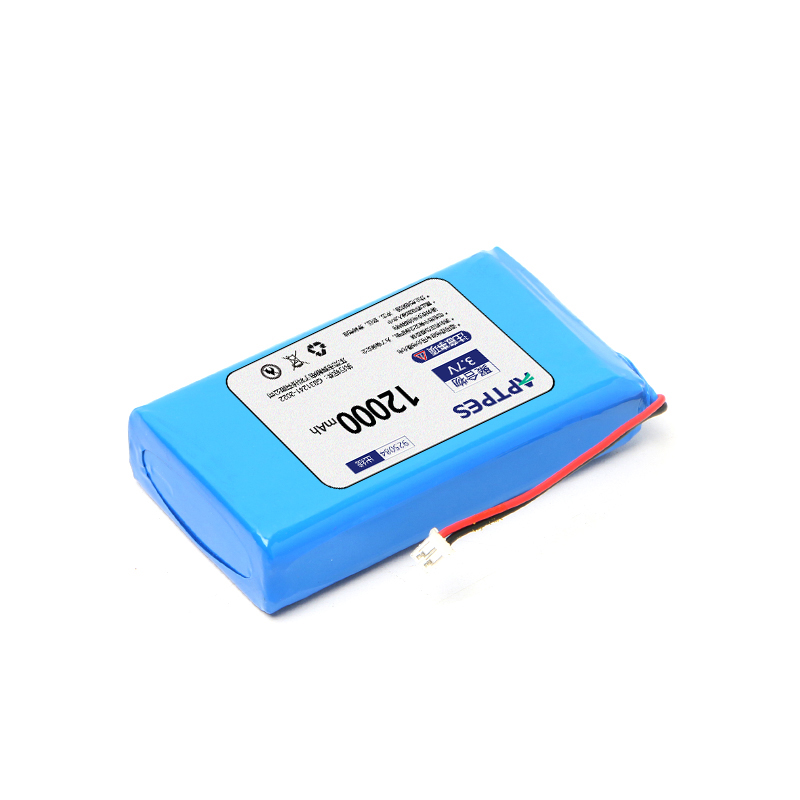
Every technology carries inherent compromises. High-capacity power solutions introduce specific risks and limitations. You must account for these factors to manage your hardware safely.
A massive energy reserve requires substantial physical space. This creates a harsh reality for multicopter and UAV operators. The added weight of a massive pack requires more thrust to stay airborne. More thrust demands higher amperage from the motors. This cycle creates diminishing returns on actual flight time. You might double the battery capacity but only gain a fraction of extra flight duration. Ground-based vehicles also suffer altered centers of gravity. You must balance the need for energy against payload limits.
Adopting high-capacity lithium cells demands significant upfront resources. You cannot simply buy the cells in isolation. They require specialized infrastructure to function safely. This reality makes them less ideal for infrequent or casual use. You must invest in smart chargers, balance boards, and fireproof storage solutions. These premium components demand a larger initial budget allocation. The investment makes sense for daily operators but poses a barrier for hobbyists.
Lithium chemistry demands absolute respect regarding storage. You cannot treat them like alkaline batteries. Balance chargers are strictly necessary to keep individual cells equalized. Storing a pack at 100% capacity accelerates internal degradation. It often leads to dangerous cell swelling. You must perform a storage charge to keep cells around 3.8V if resting them for several days. Failing to follow these strict parameters destroys the battery quickly. Negligence also introduces severe fire hazards.
Traveling carrying large lithium packs creates immediate logistical headaches. Aviation authorities like the FAA and IATA enforce strict limits on passenger aircraft. The standard limit sits at 100 Watt-hours (Wh). A 12000mAh battery easily exceeds this threshold depending on its voltage. For example, a 4S (14.8V) pack at 12Ah equals 177.6Wh. This completely disqualifies it from standard carry-on allowances. Field professionals face complicated shipping logistics when moving equipment across borders.
Not all lithium power sources use the same internal chemistry. Matching the right chemical makeup to your application prevents catastrophic failures. We break down the three primary categories below.
| Chemistry Type | Best Application | Primary Drawback | Typical Cycle Life |
|---|---|---|---|
| Lithium Polymer (LiPo) | Heavy-lift drones, fast RC vehicles | High volatility, shorter lifespan | 300 - 500 cycles |
| Lithium-Ion (Li-ion) | Long-range fixed-wing UAVs, portable electronics | Lower max discharge rates | 500 - 1000 cycles |
| Lithium Iron Phosphate (LiFePO4) | Small off-grid setups, marine electronics | Heaviest footprint, lower voltage per cell | 2000+ cycles |
LiPo packs dominate the high-performance hobbyist sector. They excel in applications requiring massive burst current. Heavy-lift drones and aggressive RC vehicles rely on their high C-ratings. They deliver power faster than almost any other chemistry. However, they carry distinct drawbacks. LiPo cells suffer from a shorter overall cycle life. They also exhibit higher volatility if punctured, crushed, or overcharged. You must monitor them constantly during operation.
Li-ion packs typically utilize cylindrical cells like the 18650 or 21700 formats. Manufacturers weld these cells together to achieve a 12000mAh capacity. They provide a highly compact footprint. They work best for long-range fixed-wing UAVs or portable electronics requiring steady power. They resist physical damage better than soft LiPo pouches. Their main drawback involves discharge speed. They feature lower maximum discharge rates compared to LiPo alternatives. They cannot handle massive, sudden power spikes safely.
LiFePO4 represents the safest mainstream lithium chemistry available. They prioritize extreme longevity and stability. You can easily achieve over 2000 cycles under normal conditions. They suit small off-grid setups, marine electronics, and reliable backup power systems perfectly. Thermal runaway is nearly impossible under normal operating conditions. The trade-off comes in physical weight. They are the heaviest of the three lithium types. They also run at a lower nominal voltage per cell (3.2V instead of 3.7V).
You must evaluate specific technical parameters before acquiring a new power source. Buying based on capacity alone often leads to hardware incompatibility. Follow this shortlisting logic to find the right match.
Deciding to integrate a massive energy reserve requires a clear decision framework. You must assess your operational needs honestly. Use the following breakdown to determine your next move.
The pros and cons of a 12000mAh Lithium Battery ultimately hinge on your specific use case. They offer incredible potential but demand respect. You gain unmatched continuous power and an excellent lifespan.
However, buyers must account for the strict management requirements and substantial physical footprint. Neglecting storage voltages or mismatched discharge rates will destroy your investment rapidly. Upgrading requires a holistic approach to your entire power delivery system.
We encourage data-driven sizing rather than simply buying the highest capacity available. Measure your actual power draw, assess your weight limits, and choose the correct chemistry accordingly. Smart preparation ensures your hardware runs safely and efficiently.
A: Charging times depend entirely on the applied current. Charging at 1C means applying 12 Amps. This process takes roughly one hour to complete. You must ensure your smart charger is powerful enough to supply that specific wattage safely. Lower charging rates will extend the time proportionally.
A: No, it will not perfectly double your flight time. The added weight of the massive pack increases overall power consumption. Your motors must work harder to generate the required thrust. This dynamic yields diminishing returns, resulting in less operational time than simple math suggests.
A: You should never leave it fully charged for extended periods. Holding a 100% charge causes internal resistance build-up and severe cell swelling. You must utilize a storage charge function to keep cells around 50% capacity if unused for more than a few days.
A: It depends heavily on your application. RC and drone applications typically use bare cells managed by external balance chargers to save weight. Conversely, consumer electronics and off-grid setups demand an internal BMS. The BMS remains critical for monitoring safety parameters automatically during unsupervised use.


