

Views: 0 Author: Site Editor Publish Time: 2026-07-07 Origin: Site


Selecting the correct power source remains a critical engineering and commercial decision. A mismatch between device requirements and battery specifications inevitably leads to premature failure, thermal risks, or costly product recalls. Many engineers assume nameplate capacity acts as the ultimate metric for success. However, nameplate capacity is only a baseline. Real-world performance relies heavily on aligning chemistry, discharge profiles, environmental constraints, and compliance standards.
This guide provides a systematic, engineering-led framework to evaluate, shortlist, and specify the exact Single Lithium Battery for your application. We will explore how to dissect load profiles accurately to match chemical stability. You will learn to navigate physical constraints to rule out inappropriate form factors early in the design phase. Finally, we establish the critical testing protocols required to ensure regulatory compliance before launching your product.
Engineers often rush to select a battery based on dimensional fit alone. A more reliable approach requires establishing the electrical parameters first. You must define success criteria rigorously to prevent catastrophic power failures later.
Common Mistake: Failing to differentiate between continuous load and pulse load. Specifying a cell based solely on average current draw guarantees voltage crashes during peak transmission events.
Once you map the power profile, you must select the appropriate internal chemistry. Every chemical compound offers a distinct advantage. We categorize these into primary (non-rechargeable) and secondary (rechargeable) groups.
Primary cells provide extended shelf lives and exceptional reliability. They serve perfectly in applications where replacing the power source remains logistically impossible.
Secondary cells dominate consumer and industrial mobility markets. The exact choice depends heavily on balancing longevity against raw power output.
Use the chart below to compare options purely on fundamental engineering parameters. This matrix helps clarify the primary compromises inherent in each chemistry.
| Chemistry | Type | Energy Density | Cycle Life | Thermal Threshold (Stability) |
|---|---|---|---|---|
| Li-SOCl2 | Primary | Very High | N/A (Single Use) | Excellent (-55°C to +85°C) |
| Li-MnO2 | Primary | High | N/A (Single Use) | Good (-30°C to +60°C) |
| LCO | Secondary | High | ~300 - 500 | Poor (Prone to thermal runaway) |
| NMC | Secondary | Moderate/High | ~1000 - 2000 | Moderate |
| LFP | Secondary | Moderate | 2000+ | Excellent (Highly stable) |
After defining the chemistry, you must integrate the power source physically. Physical constraints dictate which form factors survive the initial design review. Selecting the wrong housing compromises mechanical integrity and limits thermal dissipation.
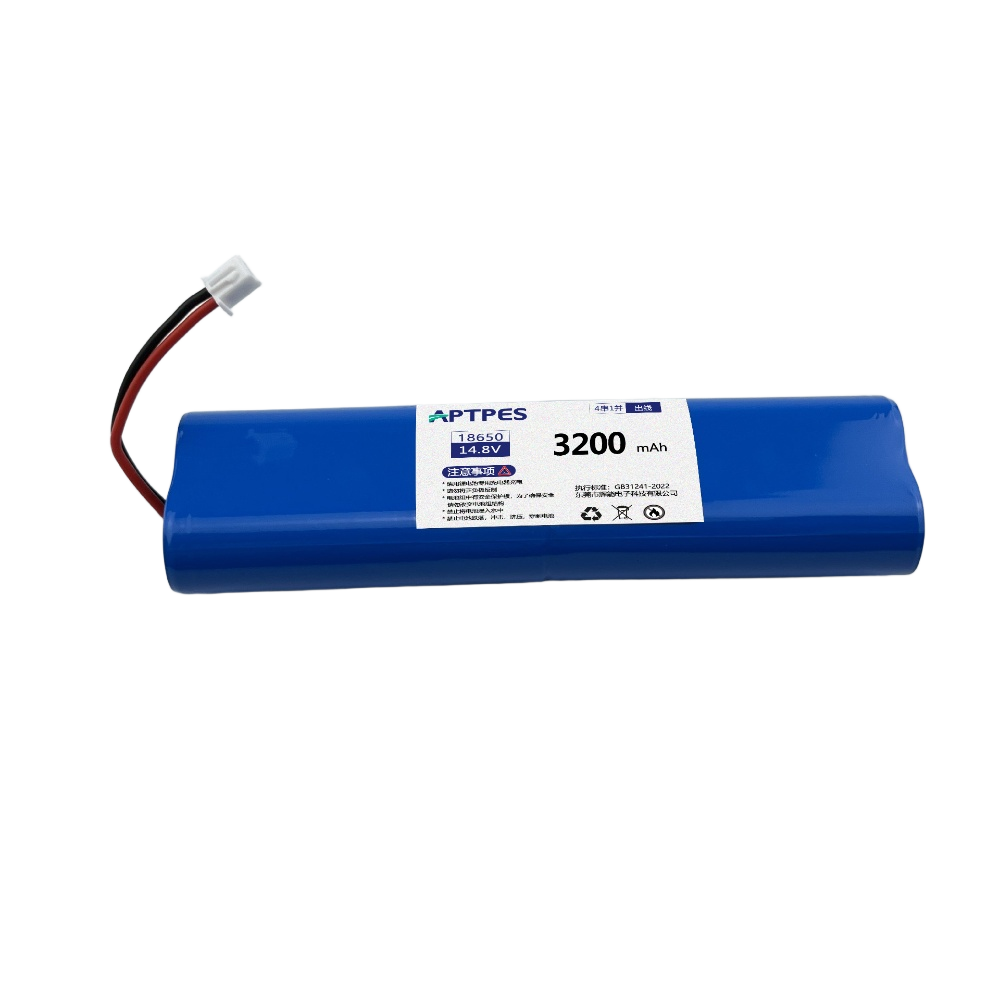
Formats like 18650, 21700, and CR123A provide standardized sizes. They offer high mechanical stability due to their rigid steel enclosures. Predictable global supply chains make procurement straightforward. Cylindrical formats remain best for rugged applications where internal space is not hyper-constrained. Their shape naturally creates air gaps when packed together, aiding passive thermal management.
Pouch cells offer highly customizable footprints. They are incredibly lightweight and thin, utilizing a flexible aluminum foil lamination. However, this flexibility introduces mechanical vulnerabilities. Integrating a pouch cell requires designing rigid device enclosures to prevent swelling and punctures. If a pouch cell swells due to gas generation, it can shatter display screens or pop hardware seams.
Coin cells, such as the ubiquitous CR2032, are ultra-compact solutions. They possess very low internal capacity. As a result, engineers restrict their usage to memory backup systems, automotive key fobs, or ultra-low-power IoT wearables. They cannot sustain high continuous currents.
Capacity tells only a fraction of the performance story. You must evaluate several dynamic metrics to ensure operational stability. Ignoring these parameters often results in devices shutting down unexpectedly, even when the state of charge indicates ample remaining power.
Best Practice: When calculating runtime for a Single Lithium Battery exposed to sub-freezing conditions, derate the stated capacity by at least 30% to account for cold-weather internal resistance spikes.
Securing the right technical specifications solves only half the puzzle. Getting your product across international borders and into consumer hands requires strict adherence to global safety standards. Neglecting certification early on guarantees expensive product launch delays.
Filter your potential manufacturers strictly by verifiable certifications. Reputable vendors will provide test reports upon initial contact.
Evaluate vendor reliability thoroughly. Look closely at minimum order quantities (MOQs) and production lead times. Custom pouch cells often require massive MOQs and tooling fees. Off-the-shelf cylindrical cells provide much lower entry barriers for early-stage production.
The commercial market occasionally suffers from counterfeit cells. Unscrupulous vendors take low-grade, rejected cells and apply new, branded heat-shrink wrappers. These "rewrapped" cells pose massive fire risks. Develop strict strategies for verifying cell authenticity. Always request continuous traceability documentation and favor direct manufacturer relationships over gray-market brokers.
Moving from theoretical selection to physical integration requires a disciplined prototyping approach. Never commit to mass production based purely on a marketing brochure.
Always demand comprehensive, up-to-date specification sheets before shortlisting any vendor. These data sheets must display discharge curves across various temperature ranges. Furthermore, request the Material Safety Data Sheet (MSDS) immediately. The MSDS dictates how your warehouse must handle and store incoming inventory.
Order small batches for rigorous in-house load testing. Do not merely test them on a static bench. You must simulate the exact environmental conditions the hardware will face. Place the prototypes in thermal chambers. Run your software to trigger maximum power transmission spikes while observing voltage stability. This physical validation confirms whether the printed data sheet matches physical reality.
Verify the manufacturer's quality control processes actively. Request their ISO 9001 certification and ask detailed questions regarding their automated inspection lines. A critical topic to cover is their defect rate policy. You need to know exactly how they handle returns and root-cause analysis if a batch fails in the field.
Selecting the optimal power solution demands far more than glancing at a capacity rating. To ensure commercial success and operational safety, you must integrate multiple engineering disciplines.
A: A bare cell contains no internal safety circuitry. It relies entirely on the device's external battery management system (BMS) to prevent overcharging or deep discharging. A protected cell features a built-in Protection Circuit Module (PCM). This microchip monitors voltage and current, severing the connection automatically to prevent short circuits, thermal events, or unsafe discharge levels.
A: Yes, replacing a cell with a higher mAh rating is generally safe. However, the new cell must perfectly match the original physical dimensions, chemical makeup, and nominal voltage. Increasing the capacity extends the device's runtime, but you must also expect proportionally longer charging times.
A: Cold weather severely impacts performance by increasing internal resistance. This causes sudden voltage drops under load, leading devices to shut down prematurely. More importantly, charging lithium-ion cells below freezing forces lithium plating on the anode. This permanently damages the cell and creates severe fire hazards during subsequent use.
A: Shelf life depends directly on the specific chemistry. Primary, non-rechargeable cells (like Li-SOCl2) can easily maintain functional capacity for 10 to 15 years in proper storage. Conversely, secondary rechargeable cells typically last 2 to 3 years in storage. They require periodic maintenance charges to prevent the voltage from dropping below fatal cut-off thresholds.


