

Views: 0 Author: Site Editor Publish Time: 2026-07-01 Origin: Site


Organizations upgrading energy storage, material handling, or fleet infrastructure face a critical decision. They must choose between legacy battery technologies and modern lithium-ion solutions. This transition represents a major operational shift. While performance metrics heavily favor newer technologies, the choice requires careful analysis. Procurement teams must justify higher upfront capital expenditures against long-term operational expenditures. They also need to mitigate integration risks effectively across existing workflows. Sticking with older power sources often hides ongoing maintenance burdens. Facility managers need clear data to move forward confidently. We will explore both the immediate gains and the potential hurdles of this upgrade. This article provides an objective, evidence-based breakdown of the advantages and disadvantages of this modern technology. You will learn how to evaluate operational efficiency, assess risk management protocols, and determine strategic alignment. Our goal is to facilitate confident, ROI-driven procurement decisions for your operations.
Every successful infrastructure upgrade begins by establishing clear success criteria. You cannot measure improvement without knowing your current baseline. We recommend starting with a thorough operational audit. Facilities often rush into procurement without understanding their true power needs. Setting clear expectations early prevents project scope creep.
First, identify the hidden costs of your current power sources. Legacy systems often require extensive watering schedules. They need regular equalization charges to maintain internal health. They also demand dedicated ventilation systems to disperse dangerous gases safely. Replacement frequency adds another layer of hidden expenses. You should document all these factors meticulously. This documentation helps you understand your true baseline. Many organizations are surprised by the sheer volume of labor hours dedicated strictly to routine maintenance.
Next, map battery performance directly to your business objectives. Determine exactly what operational shifts you want to achieve. For example, you might want to transition from a two-shift swap model to single-battery opportunity charging. Define these targets clearly before contacting vendors. You might aim to reclaim floor space currently used for charging stations. Or, you might want to increase vehicle uptime by a specific percentage. Setting these targets ensures your procurement aligns with real operational needs.
Finally, evaluate your financial thresholds carefully. Determine your organization's tolerance for upfront investment. Compare this initial capital expenditure (CapEx) against long-term yield. A higher initial investment often ensures better operational continuity. You must weigh these factors systematically. Some facilities prioritize immediate budget conservation. Others look at the decade-long reduction in operational expenditure (OpEx). Your decision here dictates which technology ultimately wins the procurement cycle.
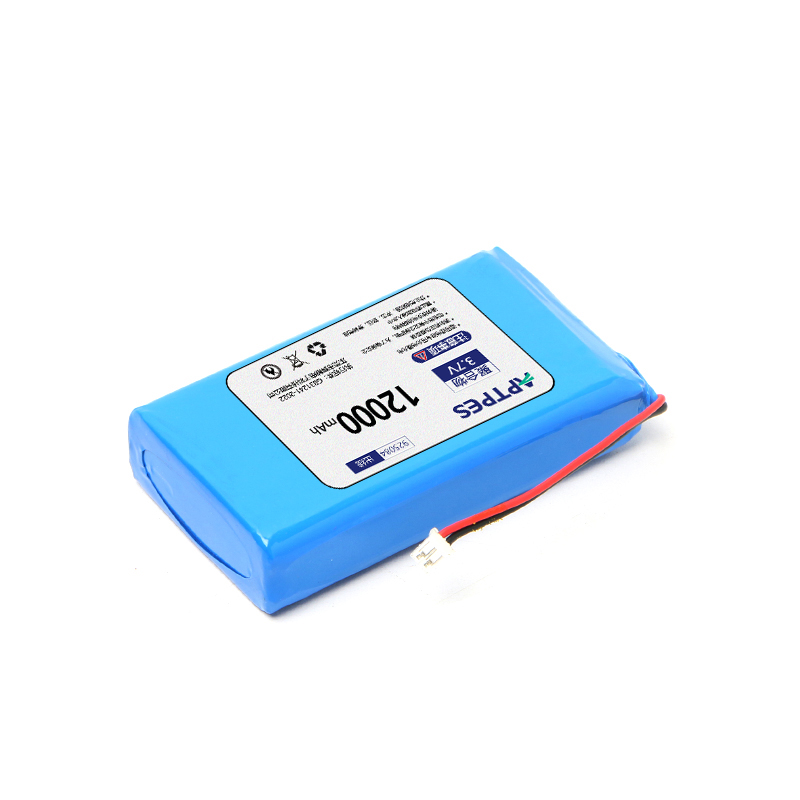
Modern battery chemistries offer remarkable physical advantages. They provide significantly higher power output per square inch compared to lead-acid alternatives. This high energy density translates into major facility benefits. You get more power packed into a much smaller physical footprint. Facilities immediately notice the difference when upgrading.
This efficiency reduces the physical footprint of energy storage systems. You can reclaim valuable warehouse space previously dedicated to bulky power units. Facility floor space becomes available for revenue-generating activities. Furthermore, this technology decreases overall equipment weight. Lighter equipment improves energy efficiency in mobile applications. Vehicles consume less power simply moving their own mass. When integrating a Lithium-ion Battery, you immediately notice the compact form factor. This size reduction allows for more flexible equipment design and improved maneuverability.
Durability is a primary driver for adopting new energy technologies. These cells deliver 2,000 to 5,000 charge cycles before degrading to 80% capacity. This lifespan substantially outperforms legacy counterparts. Traditional options often fail after just 1,000 cycles or fewer under heavy use. Such longevity usually eliminates the need for mid-lifecycle replacements. Most commercial equipment will retire before the power source fails entirely.
This reliability flattens your long-term operational expenditure curve. You remove routine maintenance labor from the equation entirely. Materials for upkeep become unnecessary. You no longer purchase distilled water or acid neutralizers. Over a ten-year horizon, these eliminated costs create significant financial relief. You free up maintenance staff to focus on proactive equipment repairs rather than basic upkeep.
Fast charging completely transforms facility workflows and scheduling. This technology supports "opportunity charging" during employee breaks. You can plug in during shift changes without damaging the cell chemistry. This approach keeps equipment running continuously throughout a busy shift. Operators simply plug the unit in while eating lunch.
It also eliminates the notorious "memory effect." You can apply partial charges without degrading the maximum capacity. Consequently, you remove the need for dedicated battery-swapping rooms. Ventilated charging areas become a thing of the past. Your operational flexibility increases dramatically. Managers no longer need to schedule complex swapping rotations. Operations become seamless, and productivity remains consistently high across all shifts.
Despite the benefits, this technology carries notable hurdles. Procurement costs per kilowatt-hour (kWh) remain noticeably higher than traditional lead-acid systems. The initial sticker shock can be substantial for procurement teams. Budget approvals often stall when executives see the upfront figures.
This high barrier to entry requires rigorous ROI modeling. You must justify the initial budget approval with hard data. Procurement teams face a challenging task when pitching these systems to finance departments. You need to present a compelling case showing long-term OpEx reductions. Without strong financial modeling, securing the necessary CapEx approval is difficult. You must prove the initial expense pays off over the equipment's lifespan.
Safety requires careful consideration and active management. Chemical volatility introduces the risk of thermal runaway. This dangerous chain reaction can occur if cells are punctured. Overcharging or exposure to extreme heat also triggers it. Once started, a thermal runaway event releases toxic gases and intense heat. It is incredibly difficult to extinguish once ignited.
Mitigating this risk necessitates reliance on complex Battery Management Systems (BMS). A BMS continuously monitors cell health, voltage, and temperature. While essential for safety, the BMS adds a point of technological failure. You must maintain this electronic component properly. If the BMS fails, the entire power unit becomes a safety liability. Redundant safety checks are mandatory for facility integration.
Adopting fast-charging capabilities often impacts your facility grid. You might require extensive electrical infrastructure upgrades. Handling higher peak amperage demands robust electrical panels. Some older facilities simply lack the grid capacity to support multiple fast chargers. Upgrading facility power lines adds significant time and expense to the project.
Furthermore, end-of-life disposal presents a significant hurdle. Recycling processes for these chemistries are currently complex. They face heavy regulations across most regions. Extracting valuable metals requires energy-intensive processes. These recycling networks remain less standardized than established lead-acid disposal channels. You must plan for end-of-life disposal years in advance. Environmental compliance adds another layer of administrative responsibility.
Different applications yield varying levels of success. We categorize the ideal operational fits below. A solution perfectly suited for one environment might fail in another. Understanding your specific application is crucial for success.
High-utilization environments benefit the most from this upgrade. Multi-shift operations often suffer when battery swapping causes measurable productivity losses. If your operators waste an hour daily swapping power units, you have a perfect use case. Automated Guided Vehicles (AGVs) also require rapid, automated charging capabilities.
To evaluate this fit, measure labor hours saved on maintenance. Compare this saved time against the cost of new chargers and batteries. You should also calculate the value of reclaimed floor space. Factor in the reduction of workplace injuries associated with heavy lifting during swap procedures.
Route-based delivery vehicles represent another excellent use case. Transit fleets requiring predictable range thrive on this technology. Rapid depot charging keeps vehicles moving throughout the day. The predictable nature of route planning pairs perfectly with scheduled fast charging.
Assess your vehicle weight-to-payload ratios carefully. Lighter power sources allow vehicles to carry more cargo. You should also analyze your charging window constraints. Determine if your depot can charge all vehicles simultaneously overnight without overloading the local grid.
Data centers demand highly reliable backup power. Critical infrastructure requires maximum power density in restricted square footage. Space is often at an absolute premium in telecom facilities. You need maximum energy density to keep servers running during outages.
Compare the 10-year replacement cycle of newer technologies against legacy options. Valve-Regulated Lead-Acid (VRLA) batteries typically require replacement every three to five years. Calculate the labor costs associated with these frequent swap-outs. Upgrading often eliminates two complete replacement cycles over a decade.
| Application Category | Ideal Operational Fit | Key Evaluation Metric |
|---|---|---|
| Heavy-Duty Material Handling | High-utilization, multi-shift environments | Labor hours saved vs. equipment cost |
| Commercial Fleets & Light EVs | Route-based delivery and transit fleets | Weight-to-payload ratios & charging windows |
| UPS & Telecom | Data centers with restricted square footage | 10-year replacement cycle comparison |
Safety certifications are absolutely non-negotiable. Verify vendor adherence to critical safety standards before signing any contracts. Look specifically for UL 2580 or UL 1973 certifications. Ensure CE marking and UN38.3 compliance for safe transport. Without these certifications, you risk severe compliance violations and insurance liabilities.
Require complete transparency regarding cell chemistry types. For example, lithium iron phosphate (LFP) offers higher thermal stability. This makes LFP preferable for many heavy industrial uses compared to nickel manganese cobalt (NMC). Understanding the underlying chemistry helps you assess long-term safety risks. Do not accept vague answers from vendors regarding internal components.
A sudden, facility-wide transition often introduces unnecessary operational risk. We strongly recommend a phased rollout approach. Breaking the deployment into stages ensures you can adapt to unexpected challenges.
A modern power source is not a universal silver bullet. It is a high-performance asset. It trades initial capital and infrastructure readiness for profound operational efficiencies. It also delivers substantial long-term savings when deployed correctly. Organizations must carefully weigh the high upfront costs against the dramatic reduction in maintenance labor and equipment downtime.
Organizations with high equipment utilization should move to the quoting and pilot phase immediately. Tight floor space and high labor costs for maintenance justify this transition. Operations with light, single-shift usage may not realize ROI quickly enough. They might struggle to justify the immediate switch. Careful evaluation prevents costly missteps.
A: A commercial unit typically lasts between 2,000 and 5,000 charge cycles before degrading to 80% capacity. In practical terms, this often translates to five to ten years of daily operational use. The exact lifespan depends heavily on the specific application, charging habits, and environmental temperatures.
A: The initial capital expenditure for newer chemistries is noticeably higher, often double or triple the upfront cost. However, long-term operational costs are significantly lower. You eliminate watering, specialized ventilation, and frequent replacements. This dynamic usually results in substantial savings over a multi-year horizon.
A: Electrical upgrades are not strictly mandatory for every installation. However, they are frequently necessary when implementing fast-charging networks. Fast chargers draw high peak amperage. You must conduct a facility load study to ensure your current electrical panels can handle the increased demand.
A: A robust BMS must offer continuous cell-level monitoring. Key features include overcharge protection, deep discharge prevention, and active temperature monitoring. It should also provide short-circuit protection and cell balancing capabilities. These automated features prevent thermal runaway and extend the overall lifespan of the unit.
A: Extreme temperatures significantly impact both performance and safety. Cold environments reduce available capacity and slow down charging rates. Conversely, extreme heat accelerates internal degradation. High temperatures also elevate the risk of thermal events. You should operate and charge these units within the manufacturer's recommended temperature ranges.


