

Views: 0 Author: Site Editor Publish Time: 2026-07-11 Origin: Site


The energy storage landscape is shifting rapidly. We are moving away from bulky, multi-battery lead-acid banks toward streamlined, single-unit lithium setups. Traditional chemistries often introduce significant operational burdens. Heavy weights, endless maintenance, and complex wiring systems drain valuable resources. Many users hesitate to upgrade due to unfamiliarity with newer architectures. Yet, sticking to outdated multi-battery systems creates long-term inefficiencies and reliability issues. This article provides a transparent, data-driven evaluation framework. We will help decision-makers determine if consolidating to a Single Lithium Battery yields superior operational efficiency. You will discover how a unified power source simplifies installations, maximizes usable energy, and boosts system uptime. By the end, you will understand exactly when and how to implement this modern power solution. You can then confidently upgrade your system for optimal, sustained performance.
Deploying a traditional power bank usually involves wiring several 12V lead-acid batteries together. You connect them in series or parallel to achieve the desired voltage and capacity. This conventional method introduces immediate vulnerabilities. Every interconnect cable serves as a potential failure point. Terminals corrode over time. Connections vibrate loose in mobile applications. When you use multiple batteries, uneven charging often occurs. One battery might reach full capacity while another lags behind. This imbalance degrades the entire bank prematurely.
Consolidating your system into a Single Lithium Battery eliminates these interconnect risks entirely. You remove the external jumper cables. You eliminate the cascading resistance that causes system voltage drops. A unified unit handles internal cell balancing automatically. This simple architecture guarantees consistent performance without constant manual terminal inspections.
Weight and spatial efficiency strongly favor lithium chemistry. Lithium Iron Phosphate (LiFePO4) offers a substantially higher energy density than Absorbent Glass Mat (AGM) or Gel batteries. Space-constrained environments demand this efficiency. Marine vessels, off-grid cabins, recreational vehicles, and industrial carts benefit immensely from reduced bulk. A traditional battery bank can easily weigh over 120 pounds. A comparable lithium unit weighs closer to 45 pounds. You free up physical space and reduce payload strain simultaneously.
We must also examine the Depth of Discharge (DoD) reality. Traditional lead-acid batteries suffer damage if discharged below 50% of their total capacity. You only get half the power you install. Lithium chemistry changes this rule entirely. A single lithium unit safely discharges to 90% or even 100% without degrading its lifespan. Because of this structural advantage, a single 200Ah lithium unit effectively out-performs two 100Ah lead-acid units tied together.
| Metric | Dual 100Ah Lead-Acid (AGM) | Single 200Ah Lithium (LiFePO4) |
|---|---|---|
| Total Nameplate Capacity | 200Ah | 200Ah |
| Safe Depth of Discharge (DoD) | 50% | 95%+ |
| Actual Usable Energy | 100Ah | 190Ah+ |
| Average Weight | 120-130 lbs | 45-55 lbs |
| Connection Points | Multiple (High resistance risk) | Two (Main Pos/Neg only) |
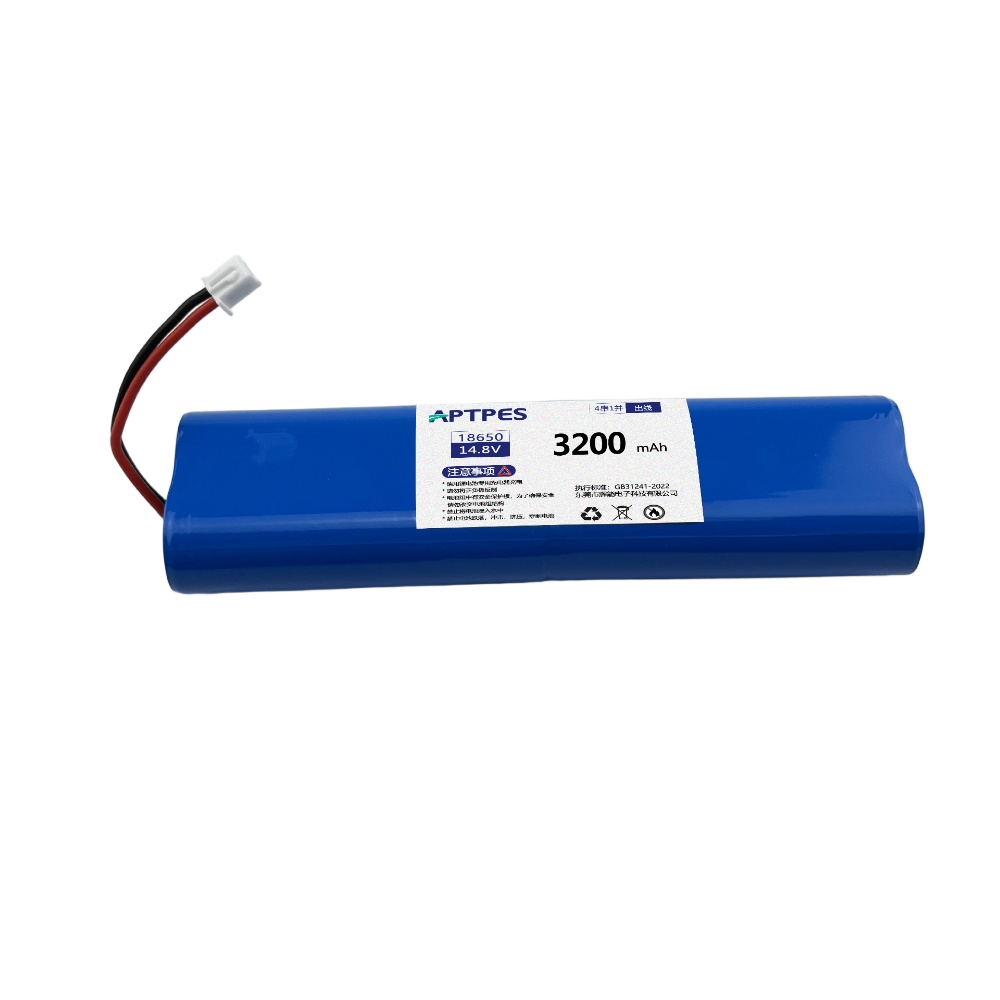
Lithium chemistry provides a remarkably flat voltage curve. When you draw power from a lead-acid battery, the voltage steadily drops. Lights dim. Inverters trigger low-voltage alarms prematurely. Motors run sluggishly. A Single Lithium Battery behaves differently. It maintains a consistent voltage output throughout almost its entire discharge cycle. Equipment receives full power whether the battery is at 90% or 20% capacity. This stability prevents the erratic equipment behavior common during lead-acid depletion.
Modern lithium units integrate a crucial technological safeguard: the Battery Management System (BMS). A multi-battery lead-acid bank relies entirely on external fuses and the user's vigilance. Conversely, a unified lithium architecture features a dedicated, internal computer. The BMS actively monitors every internal cell. It protects against over-voltage during charging. It shuts down the system if voltage drops too low. It prevents thermal runaway by monitoring internal temperatures. It instantly breaks the circuit if a short occurs. This autonomous protection elevates system security to meet rigorous modern compliance standards.
Charge acceptance rate further separates these technologies. Lead-acid batteries resist high charge currents. They require a slow, tapered absorption phase. This limitation forces you to run generators for hours. It also wastes peak sunlight if you rely on solar harvesting. Lithium chemistry accepts immense charge currents safely. You can push energy into a lithium unit rapidly until it reaches nearly 100% fullness. This efficiency drastically reduces generator runtimes. It also maximizes brief solar harvesting windows, capturing every available amp before the sun sets.
The table below acts as a summary chart illustrating the performance differences during a standard discharge cycle.
| Discharge Voltage Curve Chart (Simulated 12V System) | ||
|---|---|---|
| State of Charge (SOC) | Lead-Acid Voltage | Lithium (LiFePO4) Voltage |
| 100% | 12.7V | 13.6V |
| 80% | 12.4V | 13.3V |
| 50% | 12.1V (Safe Limit) | 13.1V |
| 20% | 11.6V (Damaging) | 12.9V |
| 0% | 10.5V (Dead) | 10.0V (BMS Cutoff) |
Evaluating an energy upgrade requires looking far beyond the initial installation. The true measure of a power system lies in its cycle life. A standard lead-acid battery typically survives between 300 and 500 charge cycles before its capacity degrades irreversibly. A premium Single Lithium Battery routinely delivers 3,500 to 5,000 cycles. When you divide the initial setup effort by the guaranteed cycle life, the operational math heavily favors lithium. You complete one installation instead of scheduling multiple replacements over a decade.
We must also factor in zero-maintenance operations. Traditional banks hide ongoing labor requirements. You must perform distilled water top-offs. You have to scrub corrosive buildup from multiple terminals. You must equalize the cells periodically. A sealed lithium unit embodies the "install and forget" philosophy. It requires no watering. It emits no corrosive gases to rust your battery tray. It eliminates the routine labor hours previously dedicated to keeping a lead-acid bank alive.
Equipment lifespan synergy represents another major advantage. When you install a power system in a recreational vehicle, an off-grid cabin, or industrial equipment, you expect the asset to last. Lead-acid batteries force you into a frustrating cycle of swapping heavy units every three years. The extended 10-plus year lifespan of lithium aligns perfectly with the ownership lifecycle of the asset it powers. You install the system once. It runs seamlessly until you sell or retire the primary asset.
Best practices for maximizing lifespan include keeping the unit away from extreme heat sources. While the internal BMS protects the cells, ambient temperatures above 110°F (43°C) can slowly reduce overall cycle longevity. Always secure the unit with proper tie-downs to prevent violent impacts, even though they lack the fragile lead plates of older technologies.
Transitioning to lithium requires addressing specific technical realities. You cannot simply drop a new unit into an old system without verifying compatibility. Charge profile compatibility stands as the primary hurdle. Lead-acid chargers rely on specific multi-stage algorithms that do not suit lithium chemistry. You must verify or upgrade your existing alternators, converter/chargers, and solar charge controllers. They need a dedicated lithium charge profile to deliver the correct constant-current/constant-voltage (CC/CV) phases.
Cold weather presents a physical limitation. Standard lithium chemistry cannot accept a charge when internal temperatures drop below freezing (32°F / 0°C). Attempting to charge a frozen lithium unit causes irreversible lithium plating on the cells. Manufacturers solve this issue practically. You can purchase internally heated models. These units use incoming charge current to warm the internal mat before allowing energy into the cells. Alternatively, you can utilize insulated mounting boxes or install the unit in a climate-controlled interior space.
Users often fall into the trap of assuming a drop-in replacement is effortless. Caveats exist regarding physical dimensions. You must check Group Sizes carefully. A high-capacity lithium unit might differ slightly in height or width from an older Group 27 or Group 31 battery. Because lithium units are significantly lighter, your old mounting brackets might not secure the new unit tightly enough. You must secure updated mounting hardware to prevent the lighter battery from shifting during transit.
Selecting the optimal power source requires a structured approach. Guesswork leads to undersized systems or mismatched components. You must evaluate your specific operational profile before committing to an upgrade. Following a clear decision framework ensures your new system matches your actual energy demands seamlessly.
By mapping out these three steps, you remove emotion from the process. You rely entirely on data regarding your spatial limits, energy consumption, and long-term usage goals.
Upgrading your energy storage is a critical step toward modernizing your equipment. Choosing a single lithium battery represents an investment in system simplicity. You actively eliminate the wiring complexity and interconnect failures that plague traditional battery banks. You gain a massive reduction in weight and a significant increase in usable energy. The flat voltage curve ensures your sensitive electronics and heavy motors run flawlessly until the very end of the charge cycle.
While the transition requires careful attention to charger compatibility and cold-weather operations, the long-term reliability is unmatched. The internal Battery Management System provides peace of mind that older chemistries simply cannot offer. You achieve a true "install and forget" power architecture.
Your next step is clear. Audit your current daily energy consumption in Amp-hours. Check the manual of your existing converter, alternator, or solar controller to verify lithium compatibility. Once you have those numbers, you can confidently size your upgrade and enjoy the benefits of sustained, reliable power.
A: Yes, it easily replaces and outperforms them. Two 100Ah lead-acid batteries provide 200Ah total, but you can only safely use 50% (100Ah) without causing damage. A single 200Ah lithium unit allows over 90% Depth of Discharge, providing roughly 190Ah of usable capacity. You get nearly double the actual power in a much lighter package.
A: Yes. Lithium batteries require a specific Constant Current/Constant Voltage (CC/CV) charge profile. Standard lead-acid chargers use desulfation and float stages that can damage lithium cells or trigger the internal BMS to shut down. You must verify your charger has a dedicated lithium setting.
A: A single large unit is generally better. It eliminates external interconnect cables, which reduces resistance and removes potential failure points. One large unit has a single BMS managing all cells, ensuring perfect internal balance. It simplifies the installation and keeps the wiring footprint clean.
A: Yes. Unlike flooded lead-acid batteries, lithium units do not off-gas toxic or explosive fumes during operation. They are completely sealed. Furthermore, the internal Battery Management System actively monitors temperatures to prevent thermal runaway, making them highly secure for enclosed compartments.


